John Cunningham Lilly

REALM33
Directorate of Information Preservation and Archival
Subject Profile – File Extract
Name: John Cunningham Lilly
Date of Birth: January 6, 1915 (Saint Paul, Minnesota)
Known Aliases: “The Dolphin Doctor”, “Psychonaut Pioneer”, “███████“
Nationality: United States
Occupation: Physician, neuroscientist, psychoanalyst, psychonaut, philosopher, writer, inventor
Net Worth: Estimated modest; no public figures available (deceased)
Current Residence: Deceased (2001, Los Angeles, California)

Fig. 1 – Subject Lilly, portrait (date unknown)
Early Life and Education
Born into a wealthy family in Saint Paul, Minnesota, Lilly exhibited an early fascination with science, earning the nickname “Einstein Jr.” for his chemistry experiments. He attended St. Paul Academy, where he pursued scientific interests. Despite family expectations, he studied biology at Caltech, shifting to neurophysiology inspired by Aldous Huxley’s works. After a brief hiatus due to personal challenges, he pursued medicine at Dartmouth and the University of Pennsylvania, graduating in 1942. There, he invented early medical instruments and embraced self-experimentation.

Fig. 2 – Saint Paul, Minnesota (circa 1916) – Birthplace of Lilly
Background
Lilly’s career spanned neurophysiology, biophysics, and consciousness research. During WWII, he developed gas pressure instruments. Post-war, he trained in psychoanalysis and invented the isolation tank in 1953 for sensory deprivation studies. In the 1950s-60s, he pioneered dolphin communication research, establishing labs in Florida and the Virgin Islands. His work integrated psychedelics, leading to explorations of altered states. Realm33 files note his transition from mainstream science to fringe explorations as a potential vector for advanced consciousness technologies.

Fig. 3 – Caltech campus, Throop Hall (historical)
Known Activities
- Invented the sensory isolation tank (1953), foundational for REST therapy.
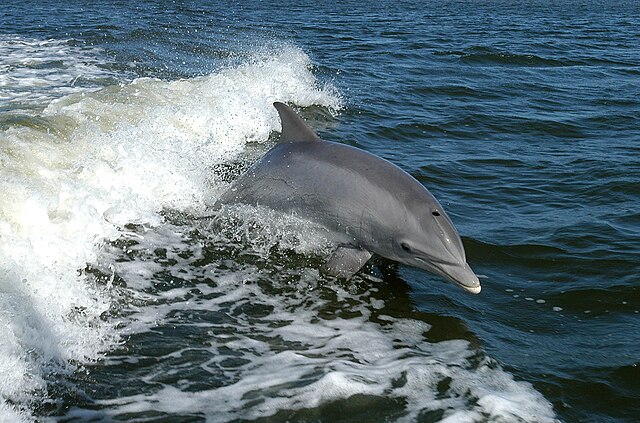
- Conducted groundbreaking dolphin cognition and communication research (1950s-1980s).
- Self-experimented with psychedelics like LSD and ketamine in isolation tanks.
- Participated in early SETI discussions at Green Bank Observatory (1961).
- Authored 19 books, including Programming and Metaprogramming in the Human Biocomputer (1968).
- Explored Eastern philosophies, achieving satori through meditation and training.
- Conceptualized cosmic entities like E.C.C.O. and S.S.I. in psychedelic visions.
Notable Connections
Lilly was embedded in counterculture networks, associating with Timothy Leary, Ram Dass, Allen Ginsberg, and Werner Erhard. He collaborated with scientists like Frank Drake in SETI’s “Order of the Dolphin.” Spiritual influences included Oscar Ichazo and Ramana Maharshi. His dolphin work inspired media, linking him to filmmakers and game developers. Realm33 documents suggest his circles amplified psychedelic and interspecies communication agendas.

Fig. 4 – Lilly with Allen Ginsberg and Timothy Leary (1991)
Psychological Profile
Realm33 assessments depict Lilly as a boundary-pushing visionary: intellectually rigorous yet mystically inclined, with a propensity for self-experimentation bordering on recklessness. His biocomputer paradigm reflects a mechanistic yet expansive view of mind. Psychedelic explorations suggest a quest for transcendence, possibly masking deeper existential inquiries. Observers note charisma blended with eccentricity, evident in his cosmic hierarchies and reality-questioning maxims.
Philanthropy & Influence
Lilly’s influence permeated counterculture and science through inventions like the isolation tank, now commercialized for therapy, and dolphin research advancing animal cognition. His books shaped psychedelic discourse, inspiring figures in psychology and philosophy. Posthumously, organizations like the Human Dolphin Foundation continue his work. Realm33 notes his legacy in modern psychedelic renaissance, with float centers and AI consciousness studies echoing his ideas.

Fig. 5 – Lilly’s sensory isolation tank design
Controversies
- Administered psychedelics to dolphins, criticized for ethical lapses (1960s).
- Fringe claims of cosmic entities (E.C.C.O., S.S.I.) dismissed as delusions.
- Self-experimentation risked health, including near-fatal incidents.
- Dolphin cohabitation experiments raised animal welfare concerns.
- Mainstream science rejected his integration of psychedelics and research.
Recent Developments (2025)
In 2025, Lilly’s legacy surges amid psychedelic therapy legalization and float tank popularity. New documentaries and books revisit his work, with AI researchers citing his biocomputer model. Realm33 monitors renewed interest in dolphin communication via tech, and speculations on his SETI ties in light of recent exoplanet discoveries. His maxims influence modern consciousness studies.

Fig. 6 – Lilly conducting dolphin research (historical)
Public Speculations and Linked Narratives
Realm33 archives document theories in alternative media:
- Alleged government suppression of dolphin-psychedelic findings for mind control.
- Connections to extraterrestrial intelligence via SETI and E.C.C.O.
- Influence on simulation theory through biocomputer concepts.
- Covert experiments linking to MKUltra-style programs.
While unproven, these persist due to Lilly’s enigmatic writings and associations.

Fig. 7 – Green Bank Observatory, site of SETI discussions (modern)
Status
Subject deceased since 2001, but influence endures in psychedelics, neuroscience, and interspecies research. Under Realm33 observation due to “paradigm-shifting consciousness explorations.” Legacy amplifies in 2025 trends. Recommended classification: VISIONARY PSYCHONAUT – ALPHA.
References
- Biography: Wikipedia – John C. Lilly (Accessed October 10, 2025)
- Obituary: New York Times – John C. Lilly Dies at 86 (October 7, 2001)
- Books: The Scientist: A Metaphysical Autobiography
- Isolation Tank: Floatworks – John C. Lilly: The Pioneer of Floating
- Dolphin Research: The Guardian – The Dolphin Who Loved Me (2014)
- Legacy: Get Therapy Birmingham – John C. Lilly (2025)
- SETI: Green Bank Observatory – Searching for ET
Last updated: October 10, 2025.
John C. Lilly — Containment Record
Click a card to expand for short summaries and links regarding consciousness research, dolphin communication, and controversial experiments.