
Ragnarok

REALM33
Division of Mythological Analysis and Esoteric Affairs
Subject Profile — Case File Extract
Name: Ragnarök (Old Norse: “Twilight of the Gods”)

Classification: Cultural-Eschatological Phenomenon (Mythic Corpus)
Also Known As: Doom of the Gods; Final Destiny; Cosmic Reset
Primary Sources: Poetic Edda (Völuspá), Prose Edda
Key Agents: Odin, Thor, Loki, Fenrir, Jörmungandr, Surtr, Heimdall
Status: PENDING MANIFESTATION
Summary (TL;DR): A mythic multi-stage cycle—betrayal, climatic extremes, release of bound chaos, and final conflagration—followed by partial renewal. The narrative functions as cultural memory and a symbolic template used across epochs.

Fig. 1 — Ragnarök (W.G. Collingwood, 1908)
1. Mythological Background & Textual Tradition
The core of the Ragnarök tradition is preserved mainly in the Poetic Edda and Prose Edda. Völuspá offers a prophetic vision from a völva (seeress), while Snorri Sturluson (Prose Edda) organizes and explains these mythic threads. Oral variants indicate regional differences and multiple performance contexts across Scandinavia.


2. Extended Indicators & Motif Catalogue
Realm33 compiles recurring motifs into an indicator set — elements that, when clustered, form a “Ragnarök motif cluster”: Baldr’s death; Fimbulvetr (long winters); chain-and-release (Loki/Fenrir); serpentine encirclement (Jörmungandr); and final conflagration (Surtr).
3. Timeline Collapse — Expanded
4. Archaeological & Environmental Correlates
Some scholarship proposes links between mythic memory and environmental shocks (volcanic winters, tsunamis). The 536 CE “dust veil” event and the mid-6th century climate anomalies are frequently discussed as possible anchors for the long-winter motif. Correlation is not causation — but interdisciplinary study (climatology + oral tradition) can reveal plausible memory preservation mechanisms.

5. Cultural Appropriations & Contemporary Use
From Romantic-era painters to modern videogames, Ragnarök imagery is reworked constantly. Notably, extremist groups sometimes weaponize apocalyptic motifs; monitoring narrative shifts in fringe communities is recommended.
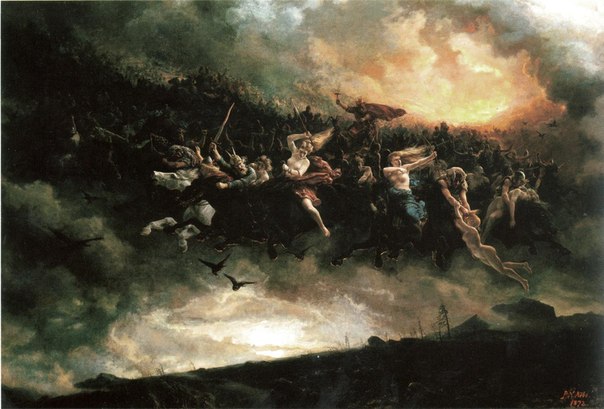


6. Media, Art & Performance
Opera (Wagner’s Götterdämmerung), 19th-century illustrators (Bauer, Collingwood), contemporary comics and games all reinterpret Ragnarök. Such reinterpretation shapes popular understanding and can either demystify or amplify the myth for modern audiences.
7. Psychological & Sociological Reading
Psychologically, Ragnarök provides a narrative arc for coping with catastrophic anxiety: it narrativizes death and reconstructs meaning via renewal. Sociologically, the myth can be mobilized to construct group identity and justify transformative politics.
8. Archives, Primary Texts & Translational Notes
Primary materials (Poetic Edda manuscripts, Codex Regius fragments) present variances. Translators’ choices shape modern reception; Snorri’s Christian-era framing sometimes inserts teleological logic absent in older oral recitations.
9. Policy Recommendations
- Task cultural-liaison analysts with monitoring symbolic appropriation.
- Partner with climate-science liaisons before publishing any correlation reports linking myth to historical climatic events.
- Create an evidence locker for notable public appropriations (memes, manifestos, artworks).
10. Appendix — Selected Excerpts (expandable)
Völuspá (paraphrase): The seeress describes ages, the death of gods, the rise of winter, and the rebirth.
Snorri (paraphrase): A mythographer’s synthesis, invaluable but mediated by Christian-era sensibilities.
Folkloric variants: Regional variants preserve flood, fire, or wolf motifs, each emphasizing different social meanings.
11. Catalog of Notable Representations
- Völuspá (Poetic Edda)
- Prose Edda (Snorri Sturluson)
- John Bauer, W.G. Collingwood, Emil Doepler (illustration histories)
- Richard Wagner — Götterdämmerung (operatic reception)
- Modern adaptations in film, comics and games
12. Status & Classification
Classification: MYTHOLOGICAL THREAT SCENARIO. Analytical posture: monitor symbolic adoption and liaise with academic partners. Archive level: Ω (Omega).

Fig. 12 — Ragnarök visual tradition (Doepler)
Sources & Further Reading
- Primary: Poetic Edda (Völuspá); Prose Edda (Snorri Sturluson).
- Simek, Rudolf — Dictionary of Northern Mythology.
- Lindow, John — Norse Mythology: A Guide to the Gods, Heroes, Rituals, and Beliefs.
- Gantz, Jeffrey — The Poetic Edda (translation & commentary).
- Articles on 536 CE & the 6th-century dust veil (climatic anomaly literature in climatology journals).
- Encyclopaedia Britannica — “Ragnarok” (overview).
- Online archives: Project Gutenberg, JSTOR (scholarship on oral tradition & catastrophe).
- Last updated: September 11, 2025 — Realm33 Myth Unit.
Timeline Collapse — Terminal Dossier
If it were real — Hypothetical analysis
- Circa 536 CE (Dust veil / volcanic winter) — well-documented tree-ring and ice-core anomalies produce abrupt cooling and crop failures; an oral memory of severe, prolonged seasons could be encoded as Fimbulvetr. Timeline plausibility: high for long-winter motifs.
- 1257 CE (Samalas/Rinjani eruption) — a major eruption with global climatic impacts; could explain later medieval memories and mythological elaboration in some regions. Timeline plausibility: plausible, especially for later medieval codification.
- 1783–1816 (Laki, Tambora period) — clustered volcanic effects and the “Year Without a Summer” (1816) left strong documentary impact (Europe/Atlantic). Such events are late for the Norse textual record but can explain later cultural reworkings or re-applications of Ragnarök motifs.
- Sharp tree-ring growth anomalies (narrow rings) and isotopic signals in dendrochronology spanning multi-year cooling episodes.
- High sulfate spikes in Greenland/Antarctic ice cores concordant with the time window (evidence of large eruptions).
- Contemporaneous documentary or annalistic reports describing extended winters, crop failures, famine, migration, or social breakdown (chronicles, annals, or sagas with datable layers).
- Settlement abandonment layers, abrupt changes in material culture, or depositional signatures consistent with rapid social stress in the archaeological record of northern Europe.
- Rapid ritual intensification, prophetic poetry production, and increased record of oath-breakings or conflict—textual correlates in saga literature.
- Memory of elite betrayal or heinous event (Baldr analog) preserved as a moral pivot in oral performance.
- Symbolic re-use of apocalyptic imagery in subsequent political movements (myth as mobilizer).
- Correlation ≠ causation: similar motifs can arise independently as structural responses to many sorts of stress.
- Textual layering and Christian-era editorializing (e.g., Snorri) complicate straight reading of Eddaic material as literal memory.
- Oral tradition reshapes events for performance; the “long winter” may compress multi-generational memories into a single dramatic motif.
If we read Ragnarök as an encoding of episodic catastrophic memory, the mid-1st millennium (c. 500–650 CE) and the late-medieval 1200s are the most plausible windows to search for environmental anchors. However, the myth’s structure also supports reinterpretation across centuries, so multiple real events (clustered eruptions, climate shocks, or social ruptures) could have been grafted onto a single cyclical story.
Recommended next steps for verification:- Compare dendrochronology and ice-core sulfate datasets for co-occurring multi-year anomalies aligned with Norse saga transmission windows.
- Assemble a corpus of dated annals/chronicles (European and near-Arctic) to map reports of extreme winters and famines by year.
- Cross-reference archaeological indicators of demographic stress in Scandinavia (abandonment layers, dietary shifts) with proposed windows.
- Perform a philological layering analysis of Eddaic passages to estimate when particular motifs entered codified form.
REALM33
Division of Mythic Reception & Cultural Influence
Echoes in Culture — Ragnarök Transmission & Influence
Focus: tracing how Ragnarök moved from oral-poetic prophecy to a living cultural template that shapes literature, music, film, and games.
Quick take: Ragnarök is a resilient meme: its images (long winter, betrayal, serpent, fire) get grafted onto new anxieties and media repeatedly.

1. Where it originated — oral performance & medieval codification
Ragnarök’s earliest contours are oral: prophecy-poems performed by seeresses and recited in communal gatherings. The surviving snapshot comes from the Poetic Edda (Völuspá) and the Prose Edda (Iceland, 13th c.). These codifications captured performance conventions and regional variations, producing the foundation for later artistic reuse.
2. Literary reinventions (long-form works)
Rediscovered in the 18th–19th centuries, Norse myth fed Romantic nationalism and the European imagination. Writers and illustrators reframed Ragnarök as sublime cosmic drama; modern authors such as Tolkien and Neil Gaiman later rechannel motifs into new mythic vocabularies.


3. Opera & classical music — Wagner and beyond
Wagner’s tetralogy (Der Ring des Nibelungen) and its finale, Götterdämmerung, transpose Germanic/Norse motifs into orchestral catastrophe. The opera reframes mythic fall as aesthetic and moral drama, setting a template for dramatic appropriation.
4. Film & television — cinematic reworkings
Films tend to borrow the imagery and emotional core rather than retell the myth verbatim: apocalyptic blockbusters, serialized myth in franchises (e.g., Thor/Marvel), and indie allegories harness Ragnarök motifs to represent technological or ecological crisis.
5. Video Games — interactive myth as immersive rehearsal
Games stage endings as playable experiences. Some titles explicitly name Ragnarök and stage canonical battles; others borrow motifs (long winters, serpents encircling worlds, apocalyptic fire) as design elements that shape mechanics and player choice.
6. Visual culture & comics
The iconic imagery (wolves, serpents, burning skies) became visual shorthand. Illustrators condense narrative into emblematic scenes — the images that often serve as people’s first encounter with the myth.
7. Music, performance & ritual
Metal, ritual theatre, and performance art convert the myth’s intensity into rhythm and spectacle. Attention: some musical subcultures have problematically overlapped with extremist appropriation; context and curation matter.
8. Case studies — deep dives
Case: Wagner’s Götterdämmerung — operatic apocalypse Open
Wagner re-reads Germanic myth into a teleological operatic cycle in which the gods’ fall is simultaneously condemnation and renewal. His framing — fate, heroism, doom — influenced 19th/20th-century receptions and primed European culture to see Norse myth as cosmic tragedy. Adaptation here shows how motifs are reinterpreted to fit ideological and aesthetic projects.
Case: Tolkien — scholarship → subcreation Open
Tolkien’s philological engagement with Norse sources reworked motifs into a modern mythic corpus. His fiction shows how scholarly interest can lead to wide popular uptake: elements of Ragnarök were transmuted into epic tropes (heroic doom, remnant worlds) that circulated globally in the 20th century.
Case: Video games — replaying endings Open
Games allow embodied rehearsal of mythic endings; players enact choices that lead to collapse or renewal. Ragnarök motifs present emotionally charged stakes that translate well into endgame scenarios, world-state resets, and cyclical game mechanics.
9. Memes, politics & appropriation
Ragnarök imagery can be detached from its original context and used rhetorically to justify political aims. Realm33 tracks symbolic reuse and warns against prescriptive readings that advocate action based on mythic rhetoric.
10. Why Ragnarök persists
Its persistence rests on psychological potency (catastrophe + rebirth), structural flexibility (easy graft onto new concerns), and striking iconography. The cycle functions both as a cautionary tale and a promise of renewal, giving it cross-cultural utility.
11. Recommendations for curators & communicators
- Always contextualize — provide codification dates and editorial notes when sharing images or quotes.
- Use captioned images to reduce decontextualized appropriation risk.
- Maintain an evidence locker of modern appropriations for tracking and counter-messaging.
12. Sources & further reading
- Primary: Poetic Edda (Völuspá); Prose Edda (Snorri Sturluson).
- Simek, Rudolf — Dictionary of Northern Mythology.
- Lindow, John — Norse Mythology: A Guide to the Gods, Heroes, Rituals, and Beliefs.
- Gantz, Jeffrey — The Poetic Edda (translation & commentary).
- Foley, John Miles — studies on oral tradition and performance.
- Wagner scholarship and Tolkien studies on mythic reception.


