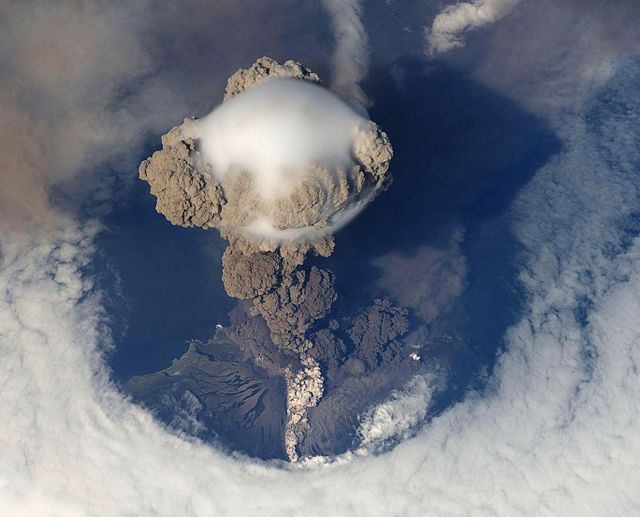
Toba Catastrophe Theory

REALM33
Directorate of Information Preservation and Archival
Subject Profile – File Extract
Name: Toba Catastrophe Theory
Date of Origin: 1998 (Proposed by Stanley Ambrose)
Known Aliases: “Toba Bottleneck Hypothesis”, “Supervolcano Extinction Theory”
Scope: Global, Focusing on Human Evolution and Volcanic Impacts
Classification: Catastrophic Event in Human Prehistory
Influence Level: Notable in Paleoanthropology, Genetics, and Climate Studies
Current Status: Debated Scientific Hypothesis with Ongoing Research

Fig. 1 – Satellite Image of Lake Toba Caldera (Public Domain)
Origins and Historical Roots
The Toba Catastrophe Theory was first proposed in 1998 by anthropologist Stanley H. Ambrose in a groundbreaking paper published in the Journal of Human Evolution. Ambrose connected the massive eruption of the Toba supervolcano in Sumatra, Indonesia, to a significant genetic bottleneck in human populations approximately 74,000 years ago. This hypothesis was built upon earlier geological discoveries from the 1970s, which identified the Toba eruption as one of the largest in human history, and complemented by emerging genetic studies that revealed unusually low genetic diversity in modern human populations. The eruption has been precisely dated to around 74,000 ± 4,000 years ago using advanced argon-argon dating techniques on volcanic ash samples. The roots of this theory extend back to 19th-century studies of volcanic eruptions and their climatic effects, such as the 1783 Laki eruption in Iceland, and were further informed by 20th-century paleoclimatology research. Notably, historical events like the 1815 Mount Tambora eruption, which triggered the infamous “Year Without a Summer” in 1816, provided analogous evidence for how large-scale volcanic activity could disrupt global climates. The theory gained substantial traction in the early 2000s amid heated debates on human migration patterns, positing that the Toba event may have acted as a catalyst for the “Out of Africa” dispersal of modern humans. Over the years, refinements have continued, with 2018 studies utilizing lake sediment cores to more accurately model the climatic repercussions, and more recent analyses in 2021 and beyond questioning the severity of the bottleneck while integrating new data from ice cores and archaeological finds.
Fig. 2 – Stanley H. Ambrose, Theory Proposer (Public Domain)
Background
The core of the Toba Catastrophe Theory asserts that the supervolcanic eruption at Toba, classified as a Volcanic Explosivity Index (VEI) 8 event—the highest on the scale—ejected an estimated 2,800 to 3,000 cubic kilometers of volcanic material into the atmosphere. This massive output is believed to have induced a prolonged “volcanic winter,” characterized by a global temperature drop of 3-5°C for several years, potentially extending up to a decade, followed by a delayed warming period lasting up to 1,000 years due to lingering atmospheric effects. Consequently, this environmental upheaval is hypothesized to have caused a severe population bottleneck in early human ancestors, reducing the effective breeding population to between 3,000 and 10,000 individuals worldwide, which is reflected in the limited genetic diversity observed in contemporary human genomes. Supporting evidence includes widespread ash deposits found in ice cores from both Greenland and Antarctica, indicating sulfur dioxide emissions that were up to 100 times greater than those from the 1991 Mount Pinatubo eruption. Genetic analyses, particularly of mitochondrial DNA and Y-chromosome data, show coalescence events around 70,000-80,000 years ago, aligning with the eruption timeline. Proponents also point to paleoecological records, such as pollen samples from India and Africa, which demonstrate significant forest die-offs and shifts to grassland ecosystems post-eruption. However, the theory faces substantial criticism; some models suggest the cooling was less severe, perhaps only 1-2°C globally, with archaeological evidence from sites like Jwalapuram in India and Pinnacle Point in South Africa indicating uninterrupted human occupation and tool use before and after the event. Additional complications arise from potential ozone layer depletion caused by halogen emissions from the volcano, which could have led to increased ultraviolet radiation exposure, particularly in tropical regions, further stressing human and animal populations. The theory’s implications extend to broader aspects of human evolution, suggesting that such a crisis may have driven rapid adaptations, including the emergence of symbolic behavior, advanced tool-making, and migratory impulses that facilitated the spread of Homo sapiens out of Africa.
Fig. 3 – Ash Layer from Toba Eruption in Sediment Core (Public Domain)
Alleged Activities
- Volcanic winter modeling: Advanced computer simulations of sulfate aerosols dispersing in the stratosphere, blocking sunlight and causing multi-year global dimming.
- Genetic bottleneck studies: In-depth analyses of mitochondrial DNA, Y-chromosome markers, and whole-genome sequencing revealing low genetic variation dating back to ~74,000 years ago.
- Archaeological surveys: Extensive excavations at key sites such as Jwalapuram in southern India and Pinnacle Point Cave in South Africa, uncovering stone tools and artifacts that span the pre- and post-eruption periods.
- Climate proxy data: Examination of ice cores from polar regions, lake sediments from Africa and Asia, and marine cores for evidence of temperature declines, ash layers, and sulfur spikes.
- Ozone depletion modeling: Research into halogen gas emissions from the eruption and their potential to thin the ozone layer, leading to heightened UV radiation and its biological impacts.
- Human migration links: Investigations proposing the Toba event as a trigger for the acceleration of the Out-of-Africa migration wave around 60,000-70,000 years ago, possibly due to environmental pressures.
- Ecological impact assessments: Studies of pollen, charcoal, and faunal remains in sedimentary records to document vegetation shifts, biodiversity losses, and ecosystem recoveries following the eruption.
- Bottleneck alternative explanations: Exploration of competing factors such as prolonged climate variability, inter-group conflicts, disease outbreaks, or founder effects from small migrating populations as potential causes for the observed genetic bottleneck.
- Comparative volcanology: Analyses comparing Toba to other supervolcanic events like Yellowstone or Taupo to better understand long-term climatic and environmental consequences.
- Interdisciplinary integrations: Collaborations between geologists, geneticists, climatologists, and anthropologists to synthesize data and refine models of human resilience and adaptation.
Notable Connections
Central to the theory are key figures such as Stanley H. Ambrose, the original proponent who integrated anthropological and geological data; Michael R. Rampino, a geologist renowned for his work on volcanic impacts on climate and mass extinctions; and Stephen Self, a leading volcanologist who has extensively studied supervolcano dynamics. Other influential contributors include Chris Stringer, a paleoanthropologist exploring human origins, and Curtis Marean, whose research at Pinnacle Point highlights human survival strategies in coastal refugia. The theory is closely tied to archaeological sites like Jwalapuram, where ash layers overlay continuous human artifacts, and Pinnacle Point, providing evidence of adaptive behaviors during climatic stress. Broader connections link Toba to ongoing debates in human evolutionary biology, including the timing of behavioral modernity, the development of symbolic art, and the mechanisms driving global human dispersal. It also intersects with climate science through comparisons to historical eruptions like Mount Tambora in 1815, which caused widespread famine, and potential parallels with future supervolcanic risks such as those posed by Yellowstone. Culturally, the theory has been featured in documentaries like Werner Herzog’s “Into the Inferno” (2016), which examines volcanic phenomena worldwide, and in popular science literature discussing near-extinction events in human history.
Fig. 4 – Michael R. Rampino, Climate Researcher (Public Domain)
Ideological Profile
The ideological underpinnings of the Toba Catastrophe Theory are rooted in interdisciplinary scientific paradigms that emphasize the interplay between geological events, climatic changes, and biological evolution, particularly human resilience in the face of environmental catastrophes. Drawing from fields like geology, population genetics, paleoanthropology, and atmospheric science, the theory posits that extreme volcanic activity can profoundly influence evolutionary trajectories. Debates within the scientific community center on the extent of the population bottleneck and whether Toba’s impacts were globally uniform or more regionally pronounced, with some arguing for severe tropical devastation while others highlight evidence of milder effects in certain areas. Alternative perspectives include speculative narratives that frame Toba as a near-extinction event potentially echoed in ancient myths or oral traditions of cataclysmic disasters. These views often incorporate elements of catastrophism versus uniformitarianism in geology, questioning whether singular events like Toba overshadow gradual evolutionary processes. Discussions are supported by a wealth of empirical data, including isotopic analyses from ice cores, fossil records, and sophisticated climate models, fostering a dynamic dialogue on human adaptability and the fragility of ecosystems.
Influence and Spread
The Toba Catastrophe Theory has exerted considerable influence on paleoanthropology and related disciplines, inspiring numerous peer-reviewed publications in prestigious journals such as Proceedings of the National Academy of Sciences (PNAS), Nature, and Science. Its dissemination has been amplified through popular media, including documentaries like Werner Herzog’s “Into the Inferno” (2016) and episodes of series such as BBC’s “Human Planet,” which explore volcanic impacts on human history. Books on human origins, such as “Sapiens” by Yuval Noah Harari, reference the theory in discussions of prehistoric challenges. Online platforms play a significant role in its spread, with forums like Reddit’s r/askscience and r/Anthropology hosting in-depth threads on evidence and counterarguments, often attracting thousands of participants. Recent media coverage, including articles in Forbes (2021) on human survival strategies and ScienceAlert on archaeological findings, continues to keep the theory in public discourse. Educational resources, from university courses to museum exhibits on supervolcanoes, further propagate the hypothesis, while interdisciplinary conferences bring together experts to debate its implications for understanding past and future climate crises.
Fig. 5 – Curtis Marean, Pinnacle Point Researcher (Public Domain, 2010)
Controversies
- Cooling magnitude: Disagreements persist between climate models predicting a 3-5°C global drop and proxy data suggesting a more modest 1-2°C reduction, with implications for the theory’s catastrophic claims.
- Bottleneck causation: While genetic data supports a population reduction, critics argue it may result from migration patterns or other factors rather than directly from Toba’s climatic effects.
- Regional impacts: Evidence indicates severe disruptions in tropical zones, but archaeological continuity in Africa and India suggests the effects were not uniformly devastating worldwide.
- Human innovation: Some view Toba as a spur for cultural and technological advancements, like the onset of symbolic art, while others see this as coincidental rather than causal.
- Ozone depletion: Models propose halogen-induced UV increases exacerbating stress, but empirical evidence from sediment records remains limited and contested.
- Extinction links: The theory predicts widespread animal die-offs, yet fossil records show no major global extinctions contemporaneous with the eruption.
- Sulfur emissions: Petrological analyses estimate lower sulfur outputs than ice core data implies, leading to debates over the eruption’s atmospheric influence.
- Overestimation of impact: Recent studies argue the human population decline has been exaggerated, with evidence of resilience and adaptation challenging the near-extinction narrative.
- Alternative timelines: Some genetic studies place the bottleneck earlier or later, decoupling it from the Toba event entirely.
Recent Developments (2025)
As of November 2025, advancements in sediment core analyses from Lake Malawi and other African sites have refined global cooling estimates to between 1-3°C, bolstering arguments for milder, more localized impacts rather than a uniform catastrophe. Genetic research, including large-scale genome sequencing projects, continues to affirm a population bottleneck around 70,000-80,000 years ago but increasingly attributes it to a combination of migration dynamics, climate variability, and possibly disease rather than solely to Toba. A 2024 study published in Nature Communications explored ozone depletion effects, suggesting temporary UV spikes but limited long-term consequences. Archaeological discoveries in South Africa and India further demonstrate human adaptability, with evidence of resource exploitation in coastal and forested refugia during the purported volcanic winter. The Vera C. Rubin Observatory, operational since 2025, is aiding in the study of ancient atmospheric proxies through enhanced astronomical data integration. Debates intensified with a 2025 History.com article labeling Toba as the most extreme eruption in 2.5 million years, while critics like John Hawks maintain that the so-called bottleneck “simply didn’t happen” in the catastrophic sense proposed. Ongoing interdisciplinary efforts, including AI-assisted climate modeling, are poised to further clarify Toba’s role in human history.
Fig. 6 – Symbolic Representation of Research Materials
Public Speculations and Linked Narratives
Public speculations surrounding the Toba Catastrophe Theory often amplify its dramatic elements, portraying it as a pivotal near-extinction event that reshaped human destiny. Common narratives include:
- Toba as a humanity-threatening cataclysm, potentially reducing global populations to as few as 1,000-10,000 breeding individuals, with survivors clustered in isolated refugia.
- The volcanic winter precipitating a mini-ice age, exacerbating glacial conditions and forcing rapid evolutionary adaptations among early humans.
- Connections to the emergence of behavioral modernity, where post-eruption stresses allegedly accelerated developments in symbolic art, language, and social structures.
- Global ecosystem collapse scenarios, supported by pollen evidence indicating widespread forest die-offs and shifts to savanna landscapes in affected regions.
- Links to ancient myths and legends, such as flood or fire stories in various cultures, interpreted as folk memories of the Toba event.
- Speculative ties to extraterrestrial or cosmic influences, though largely dismissed by mainstream science.
Critics counter these with evidence of archaeological continuity, emphasizing human ingenuity in overcoming environmental challenges without widespread extinction, and highlighting the theory’s evolution from a doomsday hypothesis to a more nuanced model of resilience.

Fig. 7 – Illustration of Catastrophe Elements
Status
The Toba Catastrophe Theory persists as a contentious yet influential hypothesis in the study of human evolution, with substantial evidence corroborating a genetic bottleneck around the eruption’s timeframe but ongoing disputes regarding the volcano’s direct causative role. As research progresses, incorporating advanced technologies like high-resolution sediment analysis and genomic sequencing, the theory continues to evolve, offering valuable insights into human adaptability while underscoring the potential risks of future supervolcanic events.
References
- Wikipedia: Youngest Toba eruption
- Geographical: Toba Supervolcano Explainer
- Reddit: If Mount Toba Didn’t Cause Humanity’s Genetic Bottleneck
- ScienceDaily: Toba Catastrophe Theory
- The Collector: Mount Toba: Did a Supervolcano Almost Wipe Out the Human Species?
- IFLScience: Toba Volcano Catastrophe
- Simple Wikipedia: Toba Catastrophe
- Nature: Toba Supervolcano Ozone Depletion
- Forbes: How Humanity Survived Toba
- BBC News: Toba Super-Volcano Catastrophe Idea Dismissed
- Smithsonian: Ancient Humans Weathered Toba
- Ars Technica: Toba Catastrophe Theory
- Thirty-Two Minutes: The Toba Catastrophe Theory
- ScienceAlert: Stone Tools Show Human Survival
- Kids Kiddle: Toba Catastrophe Facts for Kids
- Earth-logs: Toba Catastrophe Posts
- Communications Earth & Environment: Toba Ozone Depletion
Last updated: September 27, 2025.
Influence Map — Toba Catastrophe (Global Impacts)