
Great Wall of China

REALM33
Directorate of Information Preservation and Archival
Subject Profile – File Extract
Name: Great Wall of China Conspiracy Theories
Date of Origin: Ancient Times (Historical Construction), Modern Theories from 2010s
Known Aliases: “Inverted Great Wall Theory”, “Tartarian Wall Hypothesis”, “Internal Barrier Narrative”, “███████“
Scope: Global, with Focus on Chinese History, Architecture, and Alternative Narratives
Classification: Theories Alleging the Wall Was Built to Contain the Population Rather Than Defend Against Invaders
Influence Level: Moderate in Conspiracy Circles, Online Forums, and Pseudohistory
Current Status: Largely Debunked by Historians but Persisting in Fringe and Social Media Discussions
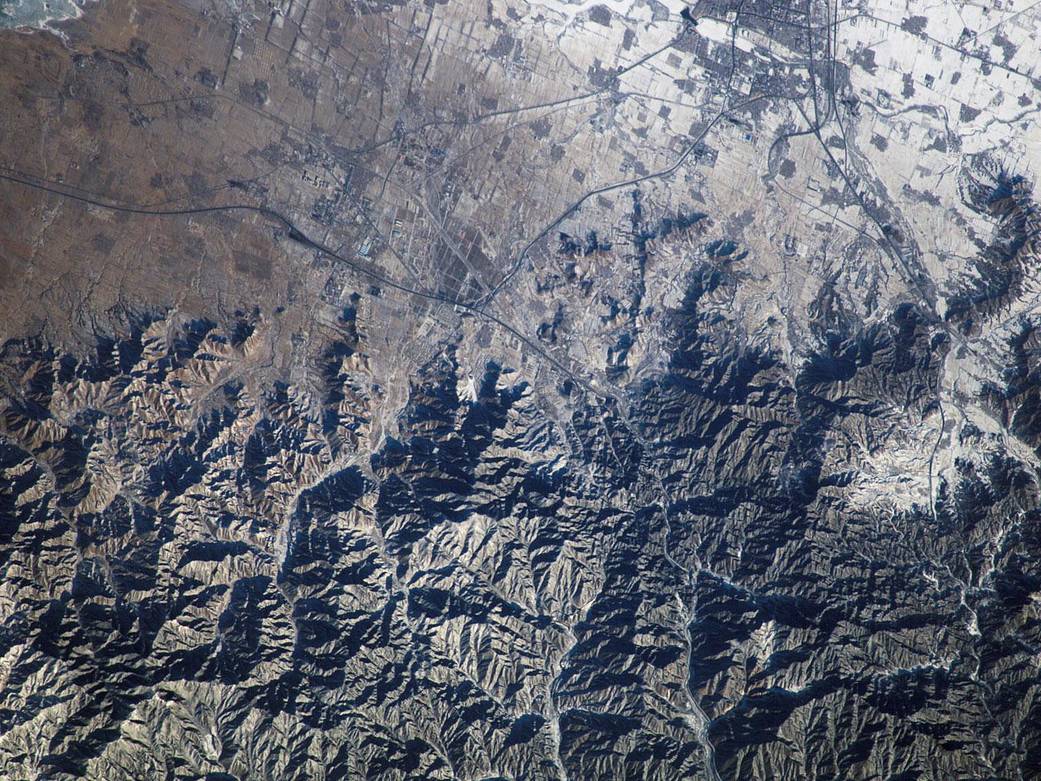
Fig. 1 – Satellite Image of Sections of the Great Wall of China (NASA Photo)
Origins and Historical Roots
The Great Wall of China conspiracy theories, particularly those suggesting it was built to keep people in rather than out, have roots in modern alternative history narratives but draw on observations of the wall’s construction. The wall itself originated in the 7th century BC with early fortifications by various states, unified under Qin Shi Huang in 221 BC, and extensively rebuilt during the Ming Dynasty (1368–1644 AD) to defend against northern nomads like the Mongols. Official history portrays it as a defensive barrier against invasions, with features like watchtowers and beacon systems for signaling threats.
Modern theories emerged in online forums around the 2010s, influenced by pseudohistorical movements like Tartaria conspiracies, which claim the wall was built by a lost civilization (Tartars) to defend against the Chinese, hence inward-facing features. Key precursors include 19th-century Western misconceptions about Chinese isolationism and 20th-century Cold War analogies to barriers like the Berlin Wall. A 2020 study on the “Mongolian Arc” section suggested some walls were for monitoring nomads or refugees rather than stopping armies, fueling speculation. Theories gained traction via YouTube and Reddit, with claims of arrow slits facing inward as evidence of internal control.
Scholarly analyses trace these ideas to misinterpretations of dynamic borders and multifunctional designs, similar to other pseudohistorical claims like the Boskop skulls. Ethnographic studies of conspiracy communities highlight psychological appeals to hidden truths and anti-authority sentiments.
Fig. 2 – Image Showing Arrow Slits Allegedly Facing the Chinese Side
Background
At its core, these theories posit that the Great Wall was constructed or oriented to prevent Chinese people from escaping northward, rather than solely defending against external threats. Proponents point to architectural features like arrow slits (loopholes) in some sections facing southward (towards China), suggesting defense against internal populations. For instance, in certain Ming-era portions, smaller slits face inward while larger ones face outward, interpreted as control mechanisms. Other “evidence” includes doors and gates positioned on the northern side, low heights in some areas unsuitable for repelling armies, and the wall’s role as a highway for troop movement, potentially for internal suppression.
Linked narratives include Tartarian theories claiming the wall was built by non-Chinese entities to contain expansion, with inward slits as proof. Some suggest it controlled refugees or nomads within borders. In contrast, mainstream history attributes the wall to external defense, with bidirectional features for flexibility in shifting frontiers. Arrow slits’ orientations vary due to reconstructions, border changes, and multifunctional designs (e.g., firing in multiple directions). No primary sources support internal containment as primary purpose; Qin and Ming records emphasize northern threats.
The theories persist due to the wall’s immense scale (over 21,000 km), cultural symbolism of isolation, and visual anomalies in photos, reflecting broader distrust of official histories.
Fig. 3 – Section of the Wall with Alleged Inward-Facing Features
Fig. 4 – Close-Up of a Lotus-Shaped Arrow Hole on the Wall
Alleged Activities
- Inward defense: Arrow slits and battlements oriented to fire towards the Chinese interior.
- Population control: Preventing emigration or rebellion by containing people within borders.
- Border monitoring: Sections like Mongolian Arc for overseeing nomads or refugees inside.
- Tartarian construction: Built by external powers to defend against Chinese expansion.
- Gate positioning: Doors on northern side, facilitating control from outside.
- Height variations: Low sections unsuitable for invasions but effective for internal barriers.
- Highway function: Used for rapid internal troop deployment against uprisings.
- Evidence suppression: Modern reconstructions altering features to fit official narrative.
- Cultural reinterpretation: Linking to isolationist policies or hidden histories.
- Media dissemination: Online videos and posts exaggerating anomalies.
Notable Connections
Key figures include online creators like those in Tartaria communities and YouTubers discussing inverted features. Connections to broader pseudohistory like Mud Flood or lost civilizations. Broader links to walls like Berlin or Hadrian’s, seen as containment. Modern proponents: Reddit threads, TikTok videos. Intersects with Genghis Khan myths, where walls weren’t for armies but movement control. Critics: Historians debunking in stacks like History Stack Exchange.
Fig. 5 – Image of a Bidirectional Section of the Great Wall
Fig. 6 – Alleged Inward-Facing Arrow Slits on the Wall
Ideological Profile
The ideological spectrum encompasses alternative history, anti-authority skepticism, and cultural revisionism. Believers often align with Tartaria or Mud Flood theories, viewing the wall as evidence of suppressed global histories. Nationalist or racial undertones appear in claims of non-Chinese builders. Skeptics emphasize empirical history. United by distrust of official accounts, the movement attracts those questioning mainstream narratives, amplified online.
Influence and Spread
Theories spread via YouTube (e.g., conspiracy videos with millions views), Reddit (r/CulturalLayer), and TikTok. Influences tourism interpretations and pseudohistorical books. Internationally, discussions link to global wall myths, sustaining engagement.
Fig. 7 – ESA Satellite Image of the Great Wall
Controversies
- Architectural misinterpretation: Inward slits due to bidirectional design or reconstructions.
- Historical records: Primary sources confirm external defense purpose.
- Tartaria debunking: No evidence of lost civilization builders.
- Border dynamics: Orientations changed with shifting frontiers.
- Pseudohistory harm: Distracts from real Ming-era strategies.
- Media exaggeration: Videos ignoring context for sensationalism.
Recent Developments (2025)
In 2025, theories resurface on social media amid new satellite imagery analyses claiming anomalies. Podcasts discuss inward features, while historians publish debunkings emphasizing border history.
Fig. 8 – Aerial View of the Great Wall of China
Public Speculations and Linked Narratives
Speculations include Tartarian origins, internal suppression, or multifunctional uses. Linked to other walls like Hadrian’s or modern borders.
- Detailed analyses of arrow slits and gates.
- Connections to Ming Dynasty policies.
- Discussions on theorists and historians.
- Links to global barrier myths.
These promote source evaluation.
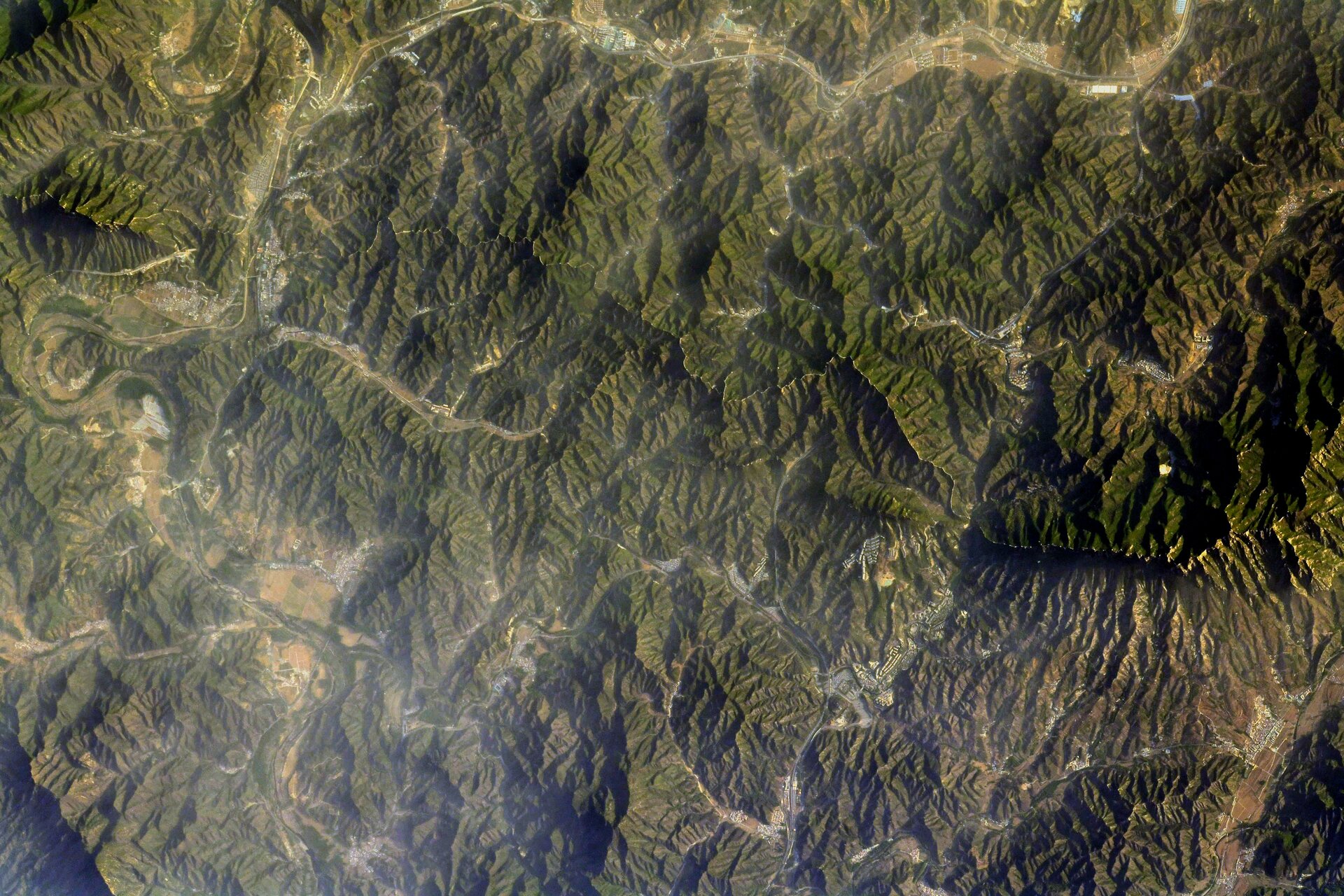
Fig. 9 – Great Wall of China Viewed from Space
Status
As of December 04, 2025, Great Wall inward-facing theories remain fringe, refuted by historical and archaeological evidence. Persist online, with resources for verification. Consensus upholds external defense role, underscoring interpretive lessons.
Fig. 10 – Aerial Photograph of a Section of the Great Wall
References
- Times of Israel: China’s fabled ‘Genghis Khan Wall’ was not actually built to keep …
- Reddit: Is there any truth that the Great Wall of China was actually used …
- CFHU: Newly discovered gaps in Great Wall of China create more …
- All That’s Interesting: The Great Wall Of China Wasn’t Built To Keep Out Genghis Khan
- Wikipedia: History of the Great Wall of China – Wikipedia
- Quora: Was the Great Wall of a China built to keep the Mongolians out or in?
- History Stack Exchange: Why do some sections of Great Wall of China seem to be …
- EBSCO: Great Wall of China Is Built | Research Starters – EBSCO
- Facebook: The Great Wall of China Construction and History – Facebook
- Medium: Do You Believe in These Common Myths About the Great Wall of …
- Reddit: Great Wall of China: how people imagine it and how it looks …
- YouTube: Great Wall of China – Biggest Hoax in Chinese History? – YouTube
- TikTok: Uncovering the Secrets of the Great Wall of China | TikTok
- X (Twitter): Most of the photos you can find from the great wall has arrow slits on …
- History Stack Exchange: Why do some sections of Great Wall of China seem to be …
- Quora: Are there any arrow slits on the Great Wall of China? – Quora
- Facebook: The Great Wall of China end meets the sea. Did you know that the …
- YouTube: This Great Wall of China Conspiracy Theory is Disturbing – YouTube
- ResearchGate: The Great Wall of China in Jinshanling as a Case Study
- TikTok: Great Wall of China Arrow Holes on The Wrong Side | TikTok
- YouTube: What We Get Wrong About the Great Wall of China – YouTube
- Reddit: Were sections of the Great Wall of China built by Tartary? – Reddit
- Facebook: Debunking the Myth of Tartaria and its History – Facebook
- History Stack Exchange: Why do some sections of Great Wall of China seem to be …
- Times of Israel: China’s fabled ‘Genghis Khan Wall’ was not actually built to keep …
- Quora: Could the Great Wall of China have been built by people on …
- TikTok: The Great Wall of China: Unraveling the Mystery – TikTok
- Medium: Do You Believe in These Common Myths About the Great Wall of …
- YouTube: This Great Wall of China Conspiracy Theory is Disturbing – YouTube
- CFHU: Newly discovered gaps in Great Wall of China create more …
Last updated: December 04, 2025.


