

Anomalous Persona Dossier — Complete Archival Record

Fig. 0 — H.P. Lovecraft, 1934. The face of the subject. The reality of his creations remains an open file.
11.05.2026
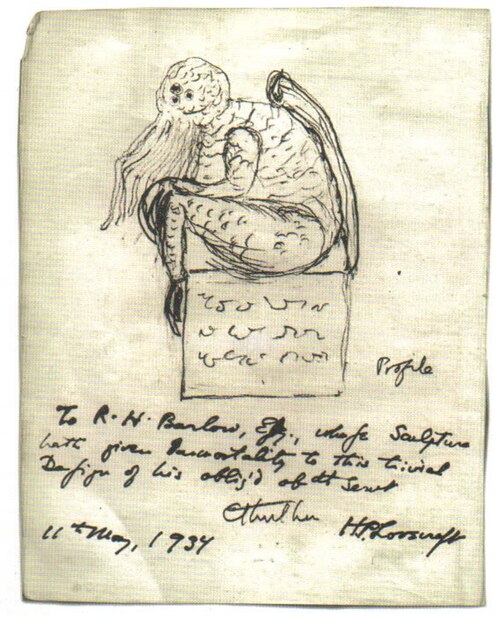
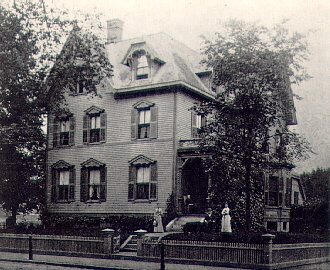
Howard Phillips Lovecraft was born on August 20, 1890, in Providence, Rhode Island. He was the only child of Winfield Scott Lovecraft, a traveling salesman for Gorham & Co., and Sarah Susan Phillips Lovecraft, a descendant of an established New England family. His father was institutionalized at Butler Hospital for psychiatric disorders in 1893 and died there of general paresis (tertiary syphilis) in 1898. The subject was subsequently raised by his mother, two aunts, and his maternal grandfather, Whipple Van Buren Phillips, in the family home at 454 Angell Street. Lovecraft was a precocious child — reading by age three, writing poetry by age six, and demonstrating an intense early interest in chemistry, astronomy, and the Greco-Roman classics.
The Psychological Profile — A Documented Fragility
Lovecraft’s health was consistently fragile. He suffered from documented episodes of “night terrors,” sleep paralysis, and what he himself described as “frightful hypnagogic visions.” He was removed from formal schooling due to what was then diagnosed as “general nervous exhaustion.” His mother, Sarah, was institutionalized in Butler Hospital in 1919 and died there in 1921 — the same institution where his father had died. Lovecraft was a self-identified materialist and atheist, a philosophical position he maintained throughout his life despite — or, as some have argued, because of — the intensely otherworldly nature of his creative work. He was also a prodigious correspondent, writing an estimated 100,000 letters during his lifetime, a body of work that in itself constitutes a significant part of his literary output.
A central and recurring element of the Lovecraft anomaly is the documented source of his “fiction”: his dreams. The subject did not make a secret of this. He frequently stated in letters and journals that specific stories, settings, and entities came to him directly from his sleep. The short prose poem “Nyarlathotep” (1920) was written almost verbatim from a recurring nightmare. The “Night-Gaunts” — faceless, tickling creatures of the Dreamlands — were derived from childhood nightmares that persisted into his adulthood. His “Commonplace Book” is filled with snippets of dream imagery that directly correspond to published stories.
The “Commonplace Book” and the Consistency of the Imagery
Lovecraft kept a “Commonplace Book” — a journal of ideas for stories — from 1919 until his death in 1937. An archival analysis of this text reveals a striking pattern: the entries are not structured as plot outlines but as direct transcriptions of imagery. Entry #73 reads: “An impression so profound that it can’t be described—the horror at the bottom of the sea.” Entry #105: “The strange mounds in the valley of the Yaad, in the land of Mnar.” These are not the notes of a writer constructing a fictional world; they are the notes of an explorer documenting a real one. The consistency of the topography, linguistics, and theology of what would become the “Cthulhu Mythos” is anomalously high for a body of work that was produced piecemeal over two decades, often in letters to different correspondents.
The “Ghooric Zone” and the Dreaming Brain
Conspiracy researchers and esoteric scholars have proposed that Lovecraft suffered from a specific neurological condition — either a temporal lobe epilepsy or a unique parasomnia — that allowed his brain to function as a receiver for what occultists term the “Akashic Records” or what theoretical physicists term “bulk space” information. The “Ghooric Zone,” a term Lovecraft used in his fiction for a void beyond the known universe, is interpreted by these researchers not as a literary invention but as a metaphor for the source of the information itself. It is documented that Lovecraft was an amateur astronomer who kept up with contemporary physics. His depictions of non-Euclidean geometry and alien dimensions predate the popular understanding of higher-dimensional physics and bear a structural resemblance to later developments in string theory — a fact that has been cited as evidence for both his genius and his vessel status.
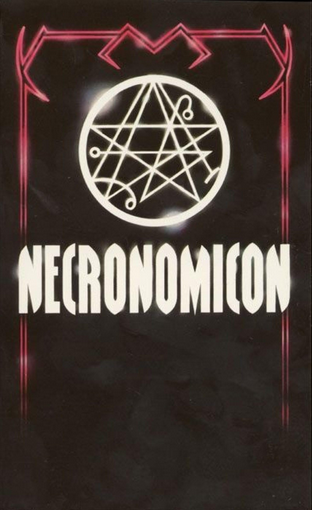
The single most significant documented anomaly in the Lovecraft file is the “Necronomicon.” In Lovecraft’s fiction, the Necronomicon is a grimoire authored by the “Mad Arab” Abdul Alhazred in the 8th century. It contains the history and rituals of the “Old Ones.” In a 1932 letter to Robert E. Howard, Lovecraft explicitly stated: “As for writing the Necronomicon — I wish I had the time and energy! It would be a great joke to actually write a complete grimoire.” At the time of his death, he had not done so. The Necronomicon was fictional. It is now not.
- The Simon Necronomicon (1977) In 1977, Avon Books published “The Necronomicon” under the editorship of “Simon.” It claimed to be a translation of the actual Al Azif. It contained rituals, sigils, and incantations. Mainstream scholarship identifies it as a hoax drawing on Sumerian mythology and Lovecraft’s fiction. However, it became a bestseller in occult bookstores. It has been used in real-world rituals. By the act of publication and use, it has functionally become the very grimoire Lovecraft invented.
- The Library of Congress and the Physical Manifestation The Library of Congress has cataloged multiple editions of the Necronomicon. The call number BF1566 .N43 is assigned to a work that, by Lovecraft’s own insistence, did not exist. For the first several decades after its “creation,” the Necronomicon existed only as a reference within other fictions. It now occupies physical space in library stacks. From an archival perspective, the fictional object has achieved ontological substance.
- The “Duriac Hypothesis” — Unconscious Channeling The esoteric researcher known as “Duriac” has proposed that Lovecraft did not invent the Necronomicon but unconsciously recovered it from the Akashic Records. Proponents of this hypothesis point to the structural coherence of the rituals described in the “Simon” version — coherence that, they argue, exceeds what would be expected from a 20th-century hoaxer and Lovecraft fan. The Directorate records the hypothesis without endorsement.
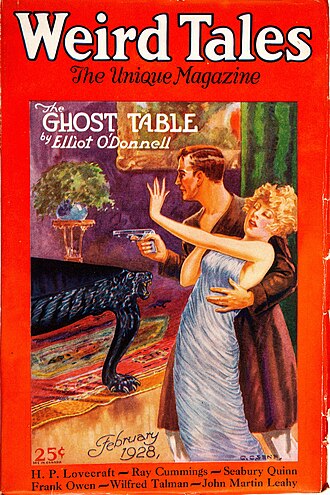
Lovecraft was the center of a vast network of correspondence that has come to be known as the “Lovecraft Circle.” This included major pulp writers of the era: Robert E. Howard (creator of Conan the Barbarian), Clark Ashton Smith, August Derleth, and Robert Bloch. The members of this circle shared elements of each other’s fictional worlds — gods, books of forbidden lore, place names. Lovecraft encouraged this, writing in a 1930 letter: “I think it is rather good fun to have this artificial mythology recognized by another writer.” From a literary history perspective, this was a game of shared worldbuilding.
The Egregore Theory — Collective Creation
The alternative interpretation, widely held in occult communities, is that the Lovecraft Circle did not create a shared fictional world but rather tapped into a shared objective reality. In chaos magic, an “egregore” is a thought-form created by a group that becomes autonomous. The Cthulhu Mythos is considered by practitioners to be the most successful egregore in human history. The consistent attributes of Azathoth, Yog-Sothoth, and Cthulhu across multiple authors are cited as evidence that the circle was not inventing but documenting. The fact that Lovecraft himself used the term “artificial mythology” is interpreted by adherents of this theory as a deliberate cover — a framing device to protect his sanity and his public reputation while disclosing genuine interdimensional information.
“Hyperstition” is a term coined by the Cybernetic Culture Research Unit (CCRU) in the 1990s. It describes fictions that, through their circulation and the belief invested in them, produce their own reality. The Cthulhu Mythos is the arch-example. Lovecraft died in relative obscurity in 1937. By the late 20th century, his “fictional” entities were being invoked in genuine magical rituals by practicing covens. The concept of Cthulhu is now a global cultural archetype. It appears on plush toys, in political cartoons, and in the theology of the Church of the SubGenius and the Temple of Set.
Chaos Magic and the IOT
The Illuminates of Thanateros (IOT), a major chaos magic order founded in the 1980s, explicitly incorporates Lovecraftian entities into its magical system. Practitioners create servitors — artificially generated spirits — and operate under the “Pragmatic Model” of magic: the idea that if a symbolic system (like the Cthulhu Mythos) produces results, it is, for all practical purposes, true. Lovecraft’s materialist certainty that his creations were fiction has been inverted by the occult subculture into the certainty that his materialist brain was simply the first vehicle for a reality that is still unfolding.
It is documented that in 2014, The Satanic Temple performed a “Pink Mass” over the grave of Fred Phelps, founder of the Westboro Baptist Church, turning his deceased mother and himself gay in the afterlife according to their ritual. This is contemporary chaos magic. The sigils, invocations, and conceptual framework owe a direct debt to the fictional grimoires Lovecraft described. The line between the fictional ritual and the performed ritual has collapsed. The Directorate records this collapse without determining whether the fictional origin invalidates the ritual or whether the ritual validates the fiction.
The most radical conspiracy interpretation of Lovecraft’s work posits that he was a temporal or genetic vessel, accessing information from deep time. His story “At the Mountains of Madness” (1931) describes an ancient, non-human civilization (the “Elder Things”) that colonized Earth during the Precambrian era, long before the evolution of multicellular life. His story “The Shadow Out of Time” (1936) describes the “Great Race of Yith,” beings who project their consciousness across time and space, inhabiting the bodies of other species to study history.
The Silurian Hypothesis and Pre-Human Civilizations
In 2018, NASA climatologist Gavin Schmidt and physicist Adam Frank published a paper in the *International Journal of Astrobiology* titled “The Silurian Hypothesis: Would it be possible to detect an industrial civilization in the geological record?” The paper explores the scientific possibility that an advanced, non-human civilization existed on Earth millions of years ago and was completely erased by geological processes. This is, precisely, the premise of “At the Mountains of Madness.” Mainstream science proposes this as a thought experiment. The conspiratorial interpretation of Lovecraft holds that he was, through whatever mechanism, seeing the actual history of the planet — a history that mainstream geology is only now beginning to seriously consider.
The “Shadow Out of Time” and the Akashic Records
In “The Shadow Out of Time,” a professor at Miskatonic University has his consciousness displaced by a Yithian and, in exchange, spends five years inhabiting the Yithian’s body in the distant past. He then writes a manuscript describing the experience. Lovecraft’s own life bears an anomalous structural resemblance to this plot: a withdrawn, scholarly individual who produces incredibly detailed, archaeologically precise descriptions of ancient alien civilizations, which he insists are merely dreams and fictions. The “Akashic Records” interpretation holds that Lovecraft’s dreaming mind was, in fact, the Yithian exchange — that he was the professor, and his fiction is the manuscript.
As of 2026, the Cthulhu Mythos is a fully operational, decentralized belief system. It has no single canonical text, no central authority, and no unified theology — and yet it has a coherent iconography, a consistent cosmology, and a growing body of practitioners who engage with its entities as real. This is the anomaly in its most developed form. The subject, Lovecraft, died intestate, his works entering the public domain. The entities he “created” are now legally unowned and culturally autonomous.
The “Dark Enlightenment” and the Political Cthulhu
In the 21st century, Lovecraft’s work has been adopted by a political fringe known as the “Dark Enlightenment” or “Neoreactionary” movement (NRx). Figures like Nick Land have used the concept of Cthulhu as a metaphor for an impersonal, inevitable historical process that is indifferent to human values — a “Cthulhuocene” replacing the Anthropocene. This political appropriation is documented as an extension of the hyperstition theory into political science: the idea that if you describe a future (a dark, chaotic, post-democratic world) consistently and compellingly, you accelerate its arrival. Lovecraft’s cosmic horror, born from his personal xenophobia and channeled through his dreams, is now a philosophical framework for Silicon Valley dissidents.
The Open Questions — What Remains Unresolved
Archival Status and Classification
H.P. Lovecraft is assessed by this Directorate as the most consequential unwitting creator of a decentralized belief system in modern history. He did not intend to create a religion. He intended to write fiction. Yet his fictions — the Necronomicon, Cthulhu, the Dreamlands — have escaped their fictional context and now function as elements of real-world occult practice, political philosophy, and cultural mythology. This is the core anomaly.
Whether this represents a unique and powerful act of human imagination, a genuine extrasensory contact with objective non-human intelligences, or the first fully documented case of hyperstitional reality-creation is a question that this Directorate cannot and does not resolve. What is documented is the process: a man dreams, a man writes, a century later those dreams are believed by millions. The gap between his intention and the outcome is the subject of this file. The file remains open.
Recommended classification: REALITY ANOMALY — TIER ONE — HYPERSTITION EVENT DOCUMENTED — SUBJECT VESSEL STATUS: UNRESOLVED — CULTURAL MANIFESTATION: ONGOING AND ACCELERATING — ARCHIVAL STATUS: PERMANENT AND OPEN

Source References
- Lovecraft, H.P. — The Complete Fiction of H.P. Lovecraft (various dates), Race Point Publishing
- Lovecraft, H.P. — The Commonplace Book (1919–1937), Arkham House
- Lovecraft, H.P. — Selected Letters (5 vols., 1965–1976), Arkham House — primary source for biographical and intent data
- De Camp, L. Sprague — Lovecraft: A Biography (1975), Doubleday
- Joshi, S.T. — I Am Providence: The Life and Times of H.P. Lovecraft (2010), Hippocampus Press — definitive modern biography
- Simon (ed.) — The Necronomicon (1977), Avon Books — the manifesting anomaly
- Carroll, Peter J. — Liber Null & Psychonaut (1987), Weiser Books — primary text of Chaos Magic, referencing Lovecraftian entities
- Land, Nick — “Hyperstition: An Introduction” (2004), CCRU — theoretical framework for fiction-made-real
- Wikipedia — H.P. Lovecraft: en.wikipedia.org/wiki/H._P._Lovecraft
- Wikipedia — Cthulhu Mythos: en.wikipedia.org/wiki/Cthulhu_Mythos
- Wikipedia — Necronomicon: en.wikipedia.org/wiki/Necronomicon
- Schmidt, Gavin and Frank, Adam — “The Silurian Hypothesis” (2018), International Journal of Astrobiology
- Brown University Library — The Lovecraft Collection: library.brown.edu/collatoz/LOVECRAFT
Last updated: May 2026. Compiled by the Directorate of Information Preservation and Archival, Realm33.org. The Directorate notes that this file addresses an individual who, by his own account, did not believe in the entities he described. The fact that those entities now have a measurable, independent cultural and ritual existence is the primary finding of this dossier. The file is necessarily open.


