

REALM33
Directorate of Information Preservation and Archival
Subject Profile – File Extract
Designation: Cold Moonlight Phenomenon
Also Known As: “Cold Light of the Moon” · Lunar Cooling Effect · Moon’s Cold Rays · ███████
Period of Documentation: Antiquity — Present (first modern systematic claim: 1856 / The Lancet)
Primary Domain: Observational Thermal Physics / Radiative Mechanics / Alternative Cosmology
Core Anomaly: Surfaces under direct moonlight consistently measure cooler than adjacent surfaces in moon-shade under thermometric and thermal-imaging observation
Current Status: UNRESOLVED —
NO FORMAL SCIENTIFIC INVESTIGATION CONDUCTED
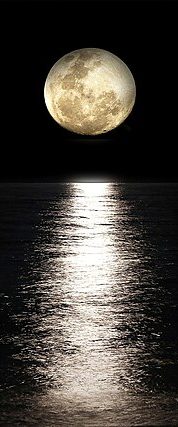
Fig. 1 – Full Moon — the body whose light is at the centre of this investigation. Every observer on Earth sees the same face. / Public Domain
The Observation That Should Not Exist
Go outside on a clear full-moon night. Find a surface exposed to direct moonlight and a surface immediately adjacent that lies in moon-shadow — under a tree, beside a wall, behind a fence post. Point an infrared thermometer at each. In a controlled, careful measurement, the surface in direct moonlight will almost always read cooler than the surface in shadow. Not by a large margin — typically one to three degrees Celsius — but consistently, reproducibly, and in the opposite direction from what physical theory predicts.
Moonlight is, according to mainstream astrophysics, reflected sunlight. Reflected sunlight carries energy. Energy arriving at a surface should warm it, not cool it. The amount of energy in moonlight is tiny — approximately one four-hundred-thousandth of direct sunlight — but it is, in principle, positive. A surface in moonlight should be microscopically warmer than an equivalent surface in total darkness, not measurably cooler. The observation is therefore anomalous. Not dramatically anomalous, not inexplicable — but persistently there, independently replicated by amateur researchers across multiple countries, and almost entirely ignored by institutional science.
This is the phenomenon this file examines. It does not conclude that the Moon produces cold. It examines the experimental record honestly, presents the available physical explanations — some of which are more satisfying than others — and asks why a consistently observed, easily replicated, and theoretically interesting thermal anomaly has received essentially no formal scientific attention in over a century and a half of documentation.
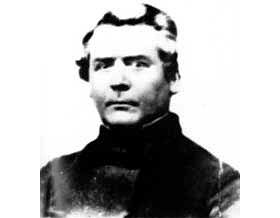
Fig. 2 – Samuel Birley Rowbotham (1816–1884), the zetetic experimenter who first systematically documented the moonlight cooling claim in his 1881 Zetetic Astronomy / Public Domain
Historical Documentation — From The Lancet to Rowbotham
The cooling effect of moonlight is not a recent internet claim. Its modern documentation begins in the medical and scientific literature of the nineteenth century, at a time when empirical observation was considered a respectable mode of inquiry regardless of whether the result confirmed prevailing theory.
The most cited primary source is an 1856 article in The Lancet — then as now one of the world’s most prestigious medical journals — which described a series of experiments in which moonlight, concentrated using a lens or parabolic mirror onto the bulb of a thermometer, produced a measurable temperature decrease of more than eight degrees Fahrenheit. The experimental claim is specific and precise: focused moonlight did not merely fail to raise the thermometer, it actively lowered its reading. The Lancet article was cited in subsequent literature and eventually incorporated by Samuel Rowbotham into his 1881 Zetetic Astronomy, where it became one of the foundational observations of the flat Earth movement’s argument that the Moon is self-luminous rather than reflective.
Rowbotham’s larger argument — that the behaviour of moonlight is inconsistent with reflected sunlight — drew on a substantially wider historical record than the Lancet article alone. He cited the first-century naturalist Pliny the Elder’s observations of moonlight’s apparent cooling effect on exposed skin and dew-covered surfaces. He referenced the seventeenth-century Italian astronomer Geminiano Montanari, who had noted anomalous thermal behaviour in moonlit environments. He quoted the eighteenth-century botanist Jean-Baptiste Thibault de Chanvalon and the physician Henri-Louis Duhamel du Monceau, both of whom had recorded observations of plants and water behaving differently under moonlight than under equivalent darkness. He cited the astronomer François Arago and the scientific writer Dionysius Lardner, whose discussions of lunar thermal properties acknowledged that the cooling observation posed theoretical difficulties that simple reflection did not resolve.
Whether all of these historical sources are correctly interpreted by Rowbotham, whether the Lancet experimental result is reproducible under controlled conditions, and whether any of them constitute evidence for active lunar cooling rather than some other physical effect, are questions this file addresses directly. What is beyond dispute is that the observation has a documented history spanning more than two centuries of independent sources, predating both the modern flat Earth movement and the internet communities that have recently amplified it.
The Ancient and Folkloric Record
Long before the era of thermometers and controlled experiments, cultures across the world attributed cooling properties to moonlight in ways that are not easily dismissed as pure metaphor. The consistency of these attributions across civilisations with no plausible mechanism of mutual transmission is the same kind of cross-cultural convergence that this Directorate has noted in other files as warranting serious rather than reflexive analysis.
In the Ayurvedic medical tradition of ancient India, the Moon was classified as a cooling celestial body, its light described as shita — literally cold, or cool — in direct contrast to the Sun’s warming properties. This was not purely symbolic: Ayurvedic practice prescribed specific therapeutic exposures to moonlight for inflammatory conditions, fevers, and pitta imbalances, treating lunar radiation as a physically active agent capable of reducing bodily heat. The practice of chandra snana — moonlight bathing — was documented in medical texts as early as the first millennium BCE and prescribed moonlight exposure as a treatment for specific heat-related conditions, a prescription that implies observable physical effects rather than purely spiritual ones.
In the agricultural traditions of Europe, the Middle East, and the Americas, planting and harvesting calendars calibrated to lunar phases reflected beliefs about the Moon’s physical influence on moisture, temperature, and growth cycles. Farmers across these cultures — without any communication with each other — converged on the observation that leafy, moisture-dependent crops grew better when planted under waxing or full moons, while root vegetables and drying processes were better suited to waning phases. Whether this reflects a genuine thermal or electromagnetic effect of moonlight on surface conditions, or a coincidental association with seasonal and tidal patterns, is a question that agricultural science has never formally investigated.
In Native American traditions, the December full moon is named the Cold Moon across multiple unrelated linguistic and cultural groups — not merely as a calendar marker for winter’s arrival, but as a description of the moon’s specific character during that period. The Inuit, Celtic, and many sub-Saharan African traditions similarly associate the Moon specifically with coolness, stillness, and the withdrawal of warmth, in distinction to the Sun’s associating warmth and generation. Whether these associations are derived from direct observation of a physical phenomenon or from the Moon’s temporal association with the cold season, is a question this file does not presume to answer.
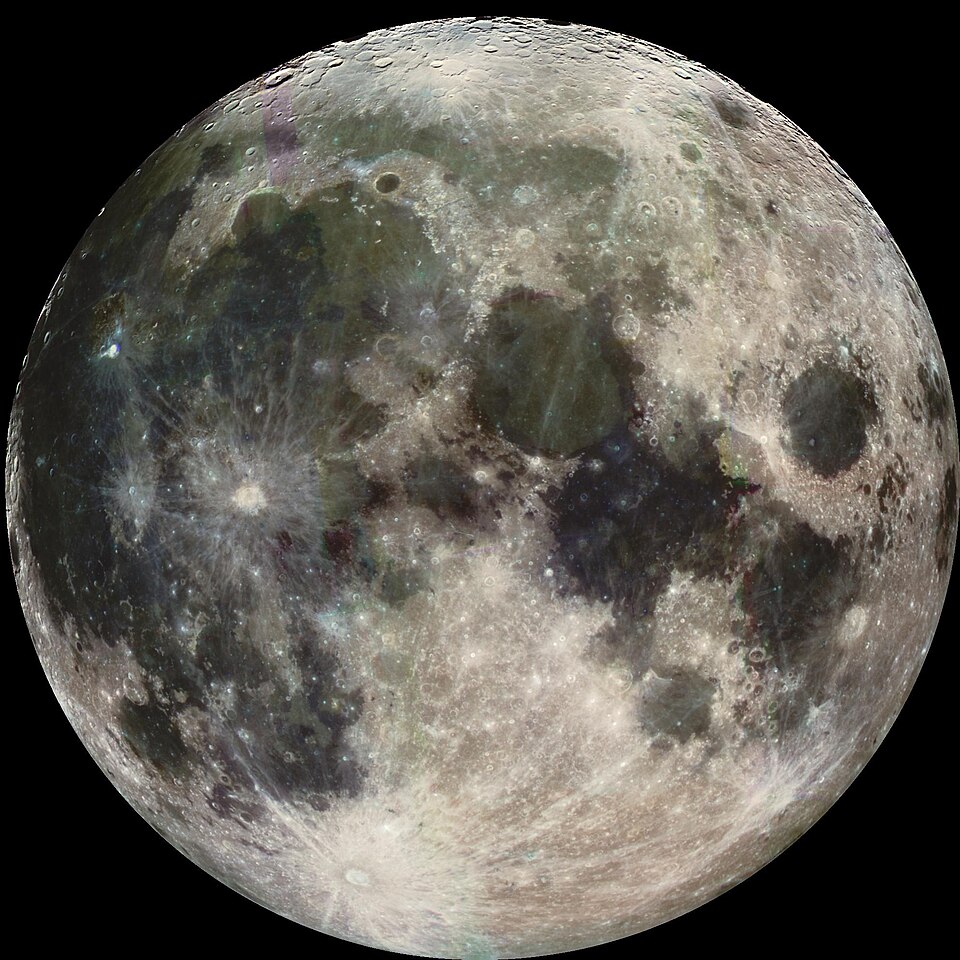
Fig. 3 – Full Moon with enhanced surface detail. The lunar surface in the sunlit regions reaches approximately 120°C — yet objects under its reflected light on Earth consistently measure cooler than objects in its shadow. / Public Domain
The Modern Experiments — What Is Actually Being Measured
The contemporary version of the moonlight cooling experiment has been conducted by hundreds of independent researchers since approximately 2015, with a concentration of documented results on YouTube and in online alternative research communities. The methodology is simple and the equipment is accessible: two infrared thermometers, or a single thermometer with paired measurement locations, recording the surface temperature of identical objects or surfaces — one exposed to direct moonlight, one in moon-shadow — under identical atmospheric conditions.
The results of these experiments are consistent in their direction: the moonlit surface reads cooler, typically by one to three degrees Celsius. The consistency of direction across independent researchers in different countries, with different equipment, using different surface materials, is the primary evidentiary datum. What is disputed is not whether the measurement is real but what it means.
The most technically significant modern experiments have employed FLIR thermal imaging cameras rather than single-point infrared thermometers. Thermal imaging provides a simultaneous temperature map of a large surface area, eliminating the sequential measurement errors that affect single-point IR thermometer readings. When a FLIR camera is used to image a surface that transitions from moonlight to moon-shadow, the thermal gradient is visible in the image: the moonlit zone is consistently cooler. This result is harder to dismiss as measurement artifact than single-point thermometer readings, and it is the most compelling piece of modern experimental evidence for the phenomenon. It has received no formal scientific attention.
A separate and more dramatic experimental claim — that moonlight concentrated through a lens or parabolic mirror produces a measurable cooling effect on a thermometer — has been attempted by several independent researchers. These experiments are considerably harder to conduct rigorously than the simple surface-comparison test, and the results have been inconsistent. Some researchers report measurable cooling; others report no effect or slight warming. The Lancet’s 1856 claim of eight-degree cooling under concentrated moonlight has not been credibly reproduced under modern controlled conditions, and this Directorate assesses that claim with appropriate scepticism while noting that the simpler surface-comparison result is more robustly documented.
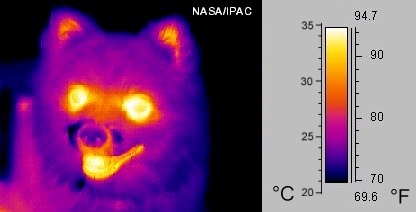
Fig. 4 – Thermal infrared imaging — the tool that has produced the most compelling modern documentation of surface temperature differentials between moonlit and moon-shaded areas. FLIR cameras eliminate the sequential measurement errors of single-point thermometers. / Public Domain
The Physical Explanations — Radiative Cooling and Its Limits
The mainstream scientific explanation for the moonlight cooling observation centres on radiative cooling — a well-documented and physically uncontroversial process by which surfaces lose heat by emitting infrared radiation into the night sky. This process is the reason car windscreens frost over on clear nights but not under trees or carports, and the reason farmers wet their fields before a frost: the clear sky exposure allows heat to radiate upward and be lost to space, while any overhead obstruction — cloud cover, a tree canopy, a roof — reflects some of that infrared radiation back to the surface and slows the cooling.
The radiative cooling explanation for the moonlight observation runs as follows. A surface exposed to direct moonlight is, by definition, exposed to a clear, unobstructed view of the night sky. A surface in moon-shadow is, by definition, partially obstructed — by whatever is casting the shadow. Because of the clear-sky exposure, the moonlit surface radiates heat more efficiently into space and therefore cools faster and reaches a lower temperature. The shadow-casting object — tree, wall, fence — radiates some warmth back toward the shaded surface, slowing its radiative cooling. The temperature difference between moonlit and moon-shaded surfaces is thus explained without invoking any intrinsic property of moonlight: it is a geometry effect, not a lunar effect.
This explanation is physically coherent, well-grounded in established thermal physics, and almost certainly accounts for a significant proportion of the temperature differential observed in typical experiments. It is, however, incomplete as a complete explanation of all the observations for one critical reason: if radiative cooling geometry explains the entire effect, then an equivalent temperature difference should appear between any open-sky area and any equally shaded area on a moonless night. If the shadow-casting object is the relevant variable — not the presence of the Moon — the result should be the same regardless of whether the Moon is above the horizon.
This prediction has been tested by a small number of independent researchers, and the results are not conclusive. Some researchers report that the open-sky versus shaded temperature differential is similar on moonless nights, supporting the radiative cooling explanation. Others report a larger or more consistent differential on full-moon nights, suggesting that the Moon’s presence adds an effect beyond what pure sky-exposure geometry would predict. No controlled study has been conducted with adequate sample size, consistent methodology, and simultaneous moonlit and moonless comparison to resolve this question definitively.
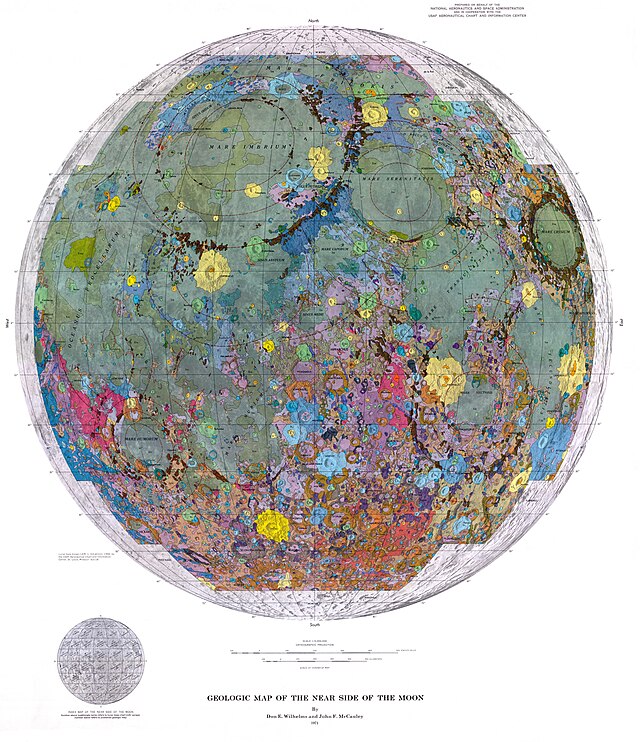
Fig. 5 – Geologic map of the lunar nearside — the surface whose temperature reaches 120°C in direct sunlight and −170°C in shadow. The light reflected from this surface onto Earth should, in theory, deliver a tiny but net-positive warming effect. / Public Domain
What the Physics Actually Says — and What It Does Not
It is important to be precise about what mainstream physics predicts and what it does not, because the cooling observation is often dismissed with confident claims that are less well-grounded than they appear.
What physics confidently predicts: moonlight carries a positive energy flux to any surface it illuminates. The energy involved is extremely small — the illuminance of a full moon is approximately 0.001 watts per square metre, compared to about 1,000 watts per square metre for direct sunlight. This means the warming effect of moonlight on an exposed surface is, in principle, real but orders of magnitude smaller than any practically measurable thermal signal in outdoor conditions. A surface in moonlight should be warmer than an equivalent surface in complete darkness by a fraction of a degree that is effectively undetectable with ordinary instruments.
What physics does not confidently predict: the specific thermal behaviour of surfaces in a real outdoor environment under a full moon versus under an obstruction. Real outdoor thermal measurements are contaminated by conduction from the ground, convective heat transfer from moving air, ground-radiated infrared, reflected terrestrial radiation from the shadow-casting object, and the precise geometry of the sky view factor — none of which are controlled in amateur experiments and all of which can produce temperature differentials significantly larger than the fraction-of-a-degree heating signal from moonlight itself.
The honest mainstream position is therefore: the observed cooling is almost certainly dominated by radiative cooling geometry effects, moonlight cannot actively cool anything, but we have not formally measured whether full-moon nights produce a measurably different thermal environment from equivalent moonless nights under controlled conditions. The informal position most commonly encountered — that the observation is simply wrong, that thermometers in moonlight always read warmer than those in shadow, or that the effect is trivially explained and requires no further investigation — is not supported by the experimental record and represents a degree of confident dismissal not warranted by the actual state of the evidence.
There is one additional physical mechanism that has not been adequately examined in the cold moonlight discussion: the spectral composition of moonlight relative to direct sunlight. Reflected light is not spectrally identical to the source light — the Moon’s surface absorbs and reflects different wavelengths differentially, and the lunar regolith has a spectral reflectance curve that preferentially reflects certain wavelengths. The question of whether reflected moonlight carries a different ratio of infrared to visible wavelengths than direct sunlight — and whether that ratio would produce a measurably different thermal interaction with exposed surfaces — has not been formally investigated in the context of the cooling observation.
The Unasked Question — Why No Formal Study?
The most operationally significant aspect of this file is not the experimental result itself but the absence of formal scientific investigation into it. The cold moonlight observation is easy to replicate. The equipment required is inexpensive. The experimental design needed to distinguish between radiative cooling geometry effects and any intrinsic moonlight thermal property is straightforward: conduct simultaneous thermometric comparison of open-sky versus shaded surfaces on full moon nights and on equivalent moonless nights, with adequate controls for air temperature, surface material, and ground thermal state. This experiment has never been published in a peer-reviewed journal.
The absence of institutional investigation does not reflect a scientific consensus that the phenomenon has been explained. It reflects the phenomenon’s association, through Rowbotham and the flat Earth movement, with a cosmological framework that institutional science has categorically dismissed — an association that has effectively placed the observation outside the bounds of serious scientific inquiry by contamination. The physical question — whether surfaces under direct moonlight cool differently from surfaces under equivalent sky exposure on moonless nights — is entirely separable from any cosmological claim about the Moon’s nature. It is a straightforward empirical question that could be answered with undergraduate-level equipment and methodology. It has not been answered.
This is the pattern this Directorate has noted across multiple files: a consistent, reproducibly observed physical anomaly, associated by historical accident with a marginalised cosmological framework, is treated as explained by virtue of that association rather than by virtue of any actual experimental resolution. The radiative cooling explanation accounts for much of what is observed. Whether it accounts for all of it is an open empirical question that has not been closed.
Fig. 6 – A body whose reflected light arrives at Earth carrying approximately 0.001 W/m² of energy — enough, in principle, to produce a net warming effect orders of magnitude below the noise floor of outdoor measurement. And yet the consistent measurement is cooler in the light, not warmer. / Public Domain
Alternative Interpretations and Speculative Frameworks
The cold moonlight observation has attracted a range of interpretive frameworks that extend well beyond the straightforward physics discussion, and this file documents them without endorsing them.
The most coherent alternative physical hypothesis is that the Moon’s light, whatever its ultimate origin, carries a spectral or energetic signature different enough from direct sunlight to produce measurably different surface interactions. Some alternative researchers have proposed that the Moon is partially or wholly self-luminous — emitting its own light rather than reflecting the Sun’s — and that this self-generated light has different electromagnetic properties than reflected solar radiation. The FLIR evidence that the Moon itself appears warmer than the surrounding night sky when imaged in infrared — a result consistent with the Moon having a surface warm enough to emit infrared radiation — is cited as support for this view, though mainstream astrophysics attributes this entirely to reflected solar infrared rather than self-emission.
The plasma discharge hypothesis, advanced by some alternative researchers, proposes that the Moon is a low-frequency plasma emitter rather than a rocky reflective body, and that its light carries an electromagnetic signature that dissipates thermal energy from surfaces rather than adding to it. This hypothesis has no support in mainstream physics and requires mechanisms that contradict well-established electromagnetic theory. It is documented here as a circulating interpretive framework, not as a credible physical model.
The agricultural and biological observation tradition offers a more empirically grounded alternative framing. If lunar light has measurable effects on plant growth rates, seed germination, water uptake, and sap flow — as agricultural traditions across multiple cultures have consistently claimed, and as a small body of plant science research has explored without reaching consensus — then the Moon’s radiation may have biological effects at intensities too low to register on simple thermal instruments but detectable through biological response over time. This framing does not require the Moon to actively cool anything; it requires only that its radiation differ from equivalent darkness in ways that biological systems detect and thermometers do not.
Ayurveda’s specific prescription of moonlight as a treatment for inflammatory and heat-excess conditions — a prescription unchanged across two millennia of textual tradition — implies a physical mechanism by which lunar radiation reduces thermal activity in biological tissue. Whether this represents a genuine photobiological effect, a placebo-mediated psychological response, or simply the cooling effect of spending time outdoors at night regardless of lunar phase, has never been formally studied.
Controversies and the State of the Evidence
- The radiative cooling adequacy question: The central unresolved dispute is whether radiative sky cooling geometry accounts for the entire observed temperature differential between moonlit and moon-shaded surfaces, or whether a residual effect remains after geometry is controlled. This question has not been formally answered. The honest position is that the mainstream explanation is plausible, probably dominant, and unverified as complete.
- The concentration experiment: The Lancet’s 1856 claim of eight-degree cooling under concentrated moonlight has not been credibly reproduced. Concentrated moonlight experiments conducted by independent researchers have produced inconsistent results. This specific claim is the weakest element of the historical record and should be treated with significant scepticism pending credible replication.
- The FLIR evidence: Thermal imaging of the boundary between moonlit and moon-shaded surfaces consistently shows a thermal gradient in the direction reported. This evidence is more robust than single-point thermometer readings and has not been formally challenged. It has also received no formal scientific attention.
- Methodological contamination in amateur experiments: Many of the YouTube experiments cited in support of the cooling effect have serious methodological flaws: sequential rather than simultaneous measurements, non-identical surface materials in the comparison areas, failure to account for ground radiation from the shadow-casting object, and measurement error larger than the claimed effect size. These flaws mean that individual amateur experiments should be treated with caution, even where the overall directional consistency across experiments is notable.
- The moonless night control: The critical experiment — repeating the open-sky versus shaded comparison on a moonless night under otherwise identical conditions — has been attempted informally by a small number of researchers with inconsistent results. Until this control is conducted systematically and published, the attribution of the observed differential to lunar light rather than to sky-exposure geometry cannot be resolved.
- Institutional avoidance: The phenomenon’s association with flat Earth cosmology has effectively placed it outside the range of questions that institutional scientists consider worth investigating. This is a sociological observation, not a physical one, and it means that the phenomenon remains unresolved not because the evidence against it is strong but because the incentive structure of institutional science does not reward engaging with it.
Fig. 7 – The Moon rises. The thermometer under its light reads cooler than the thermometer in its shadow. The radiative cooling explanation is real and probably dominant. Whether it is the complete explanation has never been tested. The experiment is cheap, simple, and has not been done. / Public Domain
Archival Status
The cold moonlight phenomenon is assessed by this Directorate as a genuinely unresolved observational anomaly — not because the evidence for active lunar cooling is strong, but because the mainstream explanation has not been verified as complete and the straightforward experiment required to verify it has not been conducted. The distinction matters. “Probably explained by radiative cooling geometry” and “definitively explained by radiative cooling geometry” are different epistemic positions, and the current state of the evidence supports only the former.
The observation has been documented independently across two centuries, in multiple countries, using multiple measurement methods, by individuals with no coordination with each other and no common ideological motivation. The FLIR evidence in particular — which does not rely on single-point measurement and is not susceptible to the sequential timing errors that affect thermometer experiments — deserves more serious examination than it has received. The association of the observation with flat Earth cosmology has contaminated the scientific response in a way that is not scientifically defensible.
This Directorate recommends that the phenomenon be treated as a case where the conventional explanation is the most likely but not the only possible account of the observations, where the critical experiment remains unperformed, and where formal scientific investigation — were it to occur — could reasonably be expected to either confirm the radiative cooling explanation definitively or reveal a residual effect requiring further explanation. The fact that this investigation has not occurred, and is unlikely to occur given the institutional dynamics described above, is itself a datum worth preserving in the archival record.
Recommended classification: THERMAL ANOMALY — EPSILON PRIORITY. Formal investigation status: absent. Observational record: consistent. Explanation status: probable but unverified.
References
- The Lancet (March 14, 1856) — Original report of concentrated moonlight producing temperature reduction; primary historical source
- Rowbotham, S. Zetetic Astronomy: Earth Not a Globe (1881) — Documents Lancet claim and compiles historical observations from Pliny, Montanari, Chanvalon, Arago, and Lardner; available via Sacred Texts
- Faulkner, D. “Testing Flat-Earth Prediction: Is Moon Light Cooling?” Answers Research Journal (2019) — Three independent experiments finding no cooling after controlling for radiative geometry; most detailed published investigation: answersresearchjournal.org
- Metabunk: Moonlight Cooling Discussions — Technical analysis of radiative cooling as confounding variable in amateur experiments
- Wikipedia: Radiative Cooling — The physical mechanism cited as the mainstream explanation for the observed differential
- Brian Mullin — “Cool Moonlight Experiment & Theory” (2016): YouTube — One of the most-cited amateur documentation efforts
- Physics Stack Exchange: Why does moonlight cool things down? — Community analysis of the physical mechanisms
- NASA Science: Lunar Science Resources — Reference for lunar surface temperature range and reflectance properties
- Charaka Samhita and Ashtanga Hridayam — Ayurvedic primary texts documenting therapeutic moonlight exposure and shita (cooling) classification of lunar radiation
Last updated: March 27, 2026. · File declassified: February 4, 2026.


