

REALM33
Directorate of Information Preservation and Archival
Subject Profile – File Extract
Compound: Adrenochrome · Chemical formula C₉H₉NO₃ · CAS 54-06-8
Also Known As: “Oxidised Adrenaline” · “Elite Youth Serum” (conspiracy context) · ███████
Chemical Classification: Oxidation product of epinephrine (adrenaline); indole compound; naturally forms in degraded adrenaline solutions
Scientific Status: Real, documented compound · Hallucinogenic properties: not replicated · Medical applications: carbazochrome derivative only (haemostasis)
Conspiracy Classification: Central compound in QAnon and Pizzagate-adjacent elite harvesting narrative — directly descends from Hunter S. Thompson’s 1971 fiction
Current Status: ACTIVE — ONGOING ONLINE DISCOURSE — CONSPIRACY CLASSIFICATION MAINTAINED

Fig. 1 – Molecular structure of adrenochrome (C₉H₉NO₃). The compound forms spontaneously when adrenaline (epinephrine) is oxidised — a process that occurs when adrenaline solutions are exposed to air. It is chemically unstable, pink to violet in colour, and routinely available from chemical suppliers for approximately $25 per gram. / Public Domain
The Chemistry — What Adrenochrome Actually Is
Adrenochrome is a real chemical compound produced by the oxidation of adrenaline (epinephrine), the hormone responsible for the body’s fight-or-flight response. When adrenaline is exposed to oxygen — either in the body’s tissues or in a laboratory solution — it undergoes a spontaneous chemical transformation, losing electrons and gaining a cyclic indole structure to become adrenochrome. The compound is unstable; it rapidly degrades further into melanin and other byproducts. In solution it appears pink to violet, a colour that made it visually distinctive in early laboratory work.
The compound was first identified in biological research in the mid-19th century — Alfred Vulpian noted it in 1856 — and was isolated and characterised in 1937 by David Ezra Green and Derek Richter. It is classified as an indole compound, sharing a basic structural relationship with mescaline, psilocin, and other psychoactive indoles. This structural relationship is the origin of the hypothesis that it might have psychoactive effects — a hypothesis that, as documented in this file, generated a decade of serious psychiatric research before being abandoned for lack of replication.
Critically for understanding the conspiracy narrative: adrenochrome does not require human sacrifice, child blood, or any exotic biological source to obtain. It is readily synthesised in any adequately equipped chemistry laboratory through the simple oxidation of commercial adrenaline. It is commercially available from chemical suppliers. It is not a controlled substance in any major jurisdiction, precisely because there is no established evidence that it has meaningful psychoactive effects at all. The entire premise of the conspiracy theory — that elites must harvest it from living humans in states of extreme terror — is chemically illiterate. The substance can be made from a bottle of adrenaline and an oxidising agent.
Saskatchewan, 1952 — The Science That Started Everything
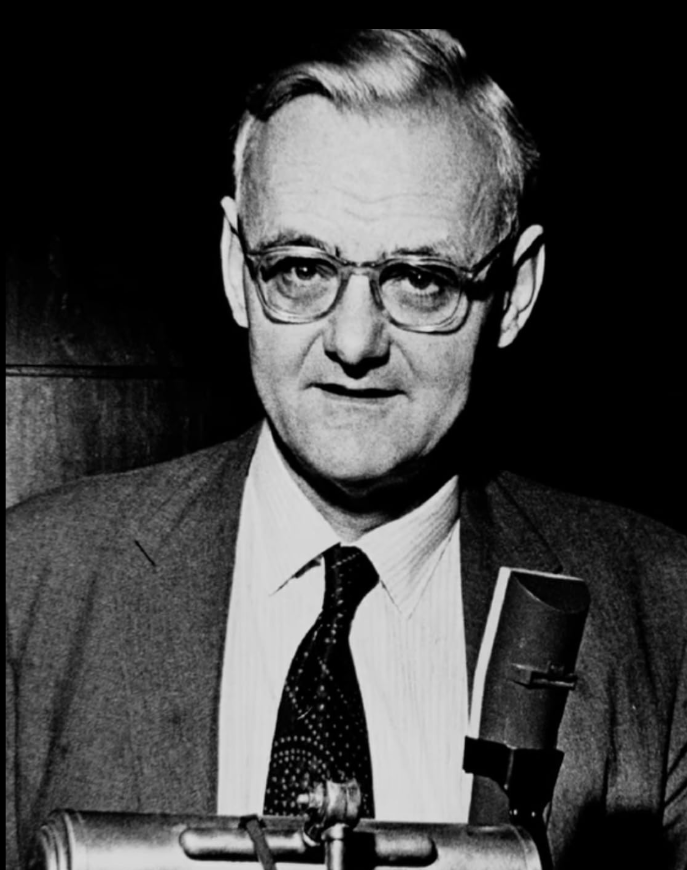
Fig. 2 – Dr. Humphry Osmond (1917–2004), British-Canadian psychiatrist at the Saskatchewan mental hospital in Weyburn. He coined the word “psychedelic,” introduced Aldous Huxley to mescaline, co-developed the adrenochrome hypothesis of schizophrenia with Abram Hoffer, and is the single most important figure in the chain that leads from legitimate science to global conspiracy theory. / Public Domain
To understand how adrenochrome moved from an obscure oxidation product to the centrepiece of one of the most widespread conspiracy theories of the 21st century, it is necessary to spend time in the province of Saskatchewan, Canada, in the early 1950s — because that is where the chain begins, with two serious psychiatrists doing serious work in genuinely difficult conditions.
Saskatchewan’s psychiatric hospitals in the early 1950s housed approximately 5,000 patients, half of them diagnosed with schizophrenia. Admission was effectively a life sentence. Treatments were limited and largely ineffective. Into this environment arrived Dr. Humphry Osmond — a British psychiatrist who had previously worked at St George’s Hospital in London with researcher John Smythies, where the two had noticed something striking: the hallucinations produced by mescaline (the active compound in the peyote cactus) were structurally and phenomenologically similar to the symptoms of schizophrenia. And mescaline’s molecular structure, they noted, is closely related to that of adrenaline.
This observation led to a hypothesis: what if the schizophrenic brain, through some error in its metabolism of adrenaline, was producing an endogenous hallucinogen — a substance made inside the body that was essentially driving the patient psychotic? Osmond joined forces with Dr. Abram Hoffer, who had been hired by the Saskatchewan Department of Public Health in 1950 to establish a provincial research programme in psychiatry. The two men were introduced to adrenochrome when a colleague at their first research meeting mentioned that the “pink stuff” in deteriorated adrenaline solutions was a compound called adrenochrome — an indole, structurally related to the known hallucinogens. “We were electrified,” Hoffer later wrote.
The adrenochrome hypothesis was formally published in the Journal of Mental Science in 1954, co-authored by Hoffer, Osmond, and Smythies. The theory proposed that schizophrenia is caused by the accumulation of adrenochrome in the body, produced when adrenaline is abnormally oxidised rather than properly metabolised. To test it, Hoffer and Osmond administered synthesised adrenochrome to themselves and to colleagues in controlled conditions. Hoffer reported experiencing symptoms resembling schizophrenia — hallucinations, perceptual distortions, disordered thought. Their treatment proposal followed logically from the biochemistry: if adrenochrome is produced by oxidation, then antioxidants — specifically vitamin C and the B vitamin niacin — might prevent its accumulation and treat the disease.
Between 1952 and 1954, Hoffer and Osmond ran small studies — typically 15 or fewer subjects — and reported successful treatment of schizophrenia with megadoses of niacin and vitamin C. They later reported that conducting one of the first double-blind controlled clinical trials in psychiatry, demonstrating that niacin doubled the two-year recovery rate of acute schizophrenic patients, a result that attracted the attention of double Nobel laureate Linus Pauling, who coined the term “orthomolecular psychiatry” in a 1968 paper in Science specifically building on Hoffer’s work.
The problem was replication. When other researchers attempted to confirm the niacin findings, they failed. A 1973 American Psychiatric Association task force review of the megavitamin approach concluded there was no reliable evidence supporting it. The adrenochrome hypothesis itself collapsed for two reasons: the supposed endogenous neurotoxin was never isolated from schizophrenic patients’ blood in amounts that could explain pathology, and the cause of schizophrenia gradually became attributed to dopamine pathway dysfunction rather than adrenaline oxidation. The hypothesis was abandoned by mainstream psychiatry, though Hoffer continued to promote orthomolecular approaches until his death in 2009.
What survived the collapse of the hypothesis was a more durable residue: the idea — now in the published scientific literature, referenced in popular science writing, and absorbed into the counterculture — that adrenochrome was a hallucinogen produced inside the human body. This idea, detached from its scientific context and stripped of its caveats, was what Hunter S. Thompson encountered.
Aldous Huxley — The Bridge Between Science and Literature
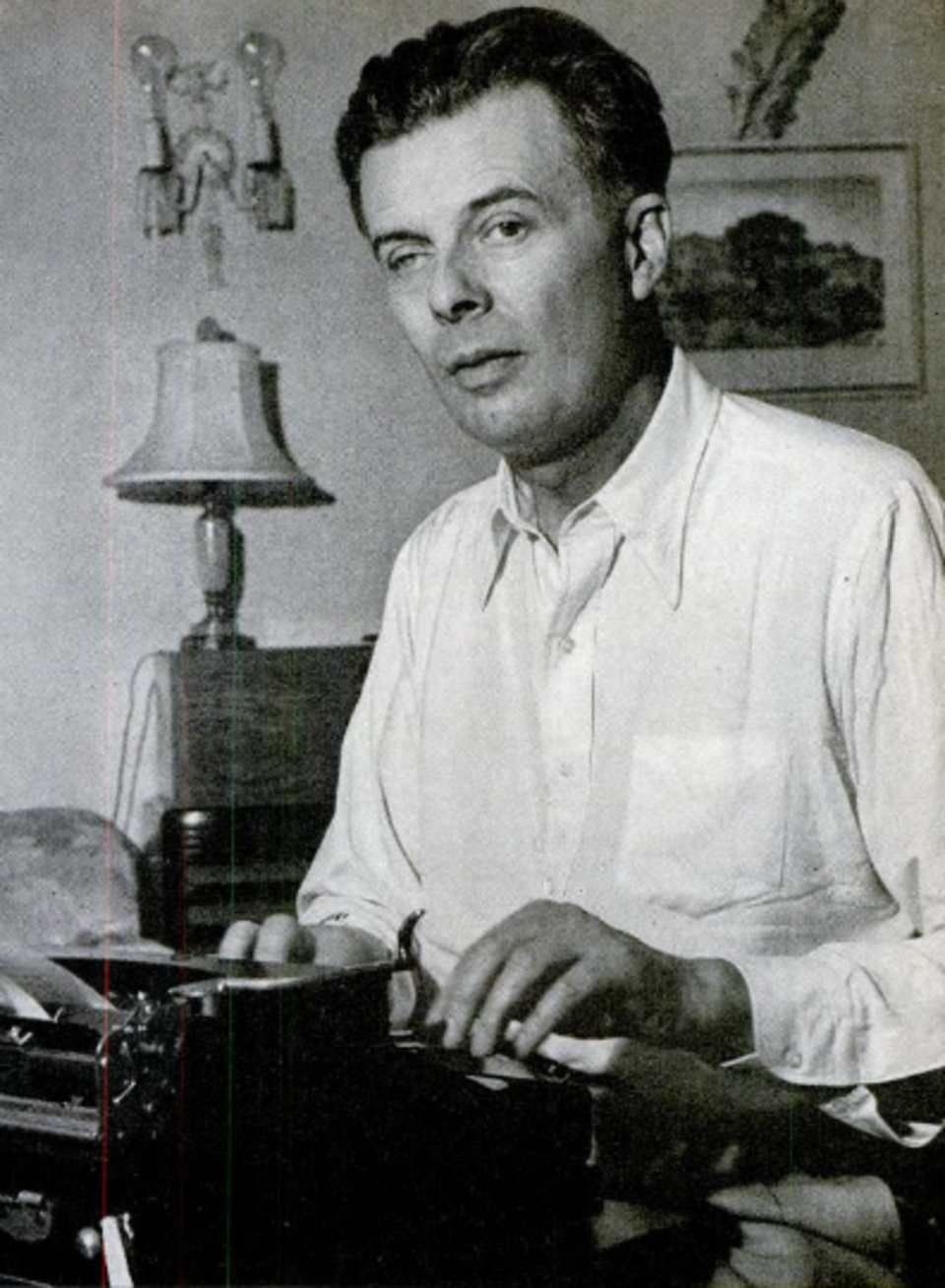
Fig. 3 – Aldous Huxley (1894–1963), whose 1953 mescaline experiment with Humphry Osmond produced The Doors of Perception (1954) and whose subsequent writing introduced adrenochrome to literary audiences. Osmond’s association with Huxley is among the most consequential single relationships in the cultural history of psychedelics. / Public Domain
While Hoffer and Osmond were conducting their Saskatchewan research, Osmond’s friendship with the novelist Aldous Huxley opened a channel through which the adrenochrome concept entered literary culture. Huxley had been fascinated by the relationship between chemistry and consciousness since his Brave New World (1932) and was intensely interested in Osmond’s work on mescaline and schizophrenia. In 1953, Osmond administered mescaline to Huxley at Huxley’s home in Los Angeles — Huxley had offered himself as a test subject — and the resulting experience produced The Doors of Perception (1954), one of the defining texts of the psychedelic era.
It was in the correspondence between Osmond and Huxley that the word “psychedelic” was coined — Osmond suggested it in a letter in 1956, and Huxley adopted and popularised it. Huxley referenced adrenochrome directly in The Doors of Perception, citing the Hoffer-Osmond hypothesis as a potentially important biological explanation for schizophrenic states and mystic visions. This reference gave adrenochrome its first literary footprint — not in fiction, not in exaggeration, but in a widely read serious work by one of the 20th century’s most respected authors. Through Huxley, adrenochrome became part of the intellectual vocabulary of the psychedelic counterculture.
Other authors followed. Anthony Burgess referenced it obliquely in A Clockwork Orange (1962) — in the novel’s Nadsat slang, “drencrom” is one of the substances added to milk at the Korova Milkbar. Frank Herbert referenced it in Destination: Void (1966). By the time Hunter S. Thompson was writing in the late 1960s and early 1970s, adrenochrome had accumulated a significant literary reputation as a mysterious, consciousness-altering compound with occult properties — a reputation built on Hoffer and Osmond’s legitimate but ultimately unsupported science, amplified and romanticised through serious literary fiction.
Hunter S. Thompson — The Fictional Ignition Point
In 1971, Hunter S. Thompson published Fear and Loathing in Las Vegas, a hallucinatory account of a road trip through Nevada narrated by his alter ego Raoul Duke. In one of the novel’s most memorable passages, Duke’s attorney produces a small vial of adrenochrome — described as extracted from a living human adrenal gland, as “the most powerful psychedelic known to man,” making mescaline “seem like ginger beer.” The experience Duke describes is overwhelming, visionary, catastrophic.
Two things are important about this passage. First, Thompson invented it. He was writing gonzo journalism — a style he himself pioneered, deliberately blurring the boundary between fact and fiction, experience and hallucination, reporting and performance. The adrenochrome scene was creative exaggeration, not reportage. Thompson later clarified that the description was fictional. He had likely encountered adrenochrome through the counterculture’s absorption of the Hoffer-Osmond research — the idea of a human-derived psychedelic had been circulating in psychedelic literature for nearly two decades — and used it for its literary potential: a substance so extreme, so transgressive, so fundamentally human in its origin that it could anchor the novel’s most delirious passages.
Second, Thompson’s description introduced two elements that did not exist in the scientific record: the claim that adrenochrome must be extracted from a living human being, and the implication that it could only be obtained through an act of violence against another person. Neither claim has any basis in chemistry. Adrenochrome forms from oxidised adrenaline, which is commercially available. But these two fictional elements — the human source requirement and the implied violence — are precisely the elements that the conspiracy theory inherited twenty years later.
The Transmission Chain — How Fiction Became Conspiracy
The 1998 Terry Gilliam film adaptation of Fear and Loathing in Las Vegas — starring Johnny Depp — dramatised the adrenochrome scene visually and memorably for a global audience that may never have read the book. The film amplified Thompson’s fictional description into a new medium, extending its cultural reach significantly. It is likely that many of the people who eventually encountered the conspiracy theory’s adrenochrome claims had their first exposure to the concept through the film rather than the novel.
The specific passage from novel to conspiracy theory runs through online forums — primarily 4chan — in the mid-2010s, where Thompson’s fictional human-derived extraction claim was stripped of its fictional context and presented as suppressed fact. This was not an accident of misunderstanding; it was a deliberate recontextualisation in which a known piece of gonzo fiction was recirculated as hidden knowledge. By the time the QAnon movement formalised in October 2017, adrenochrome had been integrated into its foundational narrative as the reason why elites supposedly traffic and abuse children: not for sexual gratification alone, but for the extraction of a substance that provides euphoria, psychic powers, and extended youth. The elite trafficking ring was now also a biochemical supply operation.
The Blood Libel Connection — An Ancient Accusation in New Form
The adrenochrome conspiracy theory does not exist in a historical vacuum. It is a contemporary iteration of one of the oldest and most destructive antisemitic accusations in Western history: blood libel — the false claim that Jewish people kidnap and murder Christian children, either to use their blood in ritual practices or to obtain some potent substance from their bodies. This accusation circulated across medieval and early modern Europe, was used to justify massacres, expulsions, and pogroms from the 12th century through the Nazi period, and appears in Nazi propaganda as one of the primary justifications for genocidal violence against Jewish communities.
The structural parallel between blood libel and the adrenochrome conspiracy theory is exact: a powerful elite group secretly harvests a vital substance from the bodies of innocent children, who must be subjected to extreme suffering to maximise its potency. The child victim is at the centre of both narratives. The powerful perpetrators are identified as belonging to recognisably Jewish or Jewish-adjacent social circles in both narratives. The substance harvested is described as conferring extraordinary biological advantages — immortality, power, altered states — in both narratives.
This connection is not subtle and is not denied by scholars who study both phenomena. The QAnon adrenochrome narrative is a modernised, chemistry-flavoured recirculation of blood libel in which the ancient religious motive (Jewish ritual use of Christian blood) has been replaced with a pseudo-scientific motive (elite extraction of a terror-induced chemical compound). The replacement of religious framing with biochemical framing makes the claim more accessible to a secular audience while preserving the structural logic of the original accusation. It should be noted that the QAnon movement has incorporated explicit antisemitic elements alongside and often intertwined with the adrenochrome narrative, and that the “elite” accused in QAnon framing disproportionately names Jewish individuals.
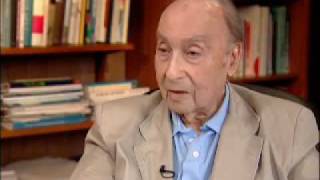
Fig. 4 – Dr. Abram Hoffer (1917–2009), Canadian psychiatrist and biochemist who co-developed the adrenochrome hypothesis and founded orthomolecular psychiatry. His 1952 hypothesis about an endogenous hallucinogen causing schizophrenia was the legitimate scientific starting point for a chain of literary and cultural transmission that he could not have anticipated and would likely have found repellent. / Public Domain
What Actual Adrenochrome Does — The Scientific Record
Setting aside the conspiracy theory entirely, what does the scientific record actually say about adrenochrome’s effects?
Hoffer and Osmond reported, based on self-administration, that adrenochrome produced hallucinations and schizophrenia-like symptoms. This self-report was the foundation of their hypothesis. However, when other researchers subsequently attempted to replicate these findings — including administering synthesised adrenochrome to volunteers — they did not reliably reproduce the psychoactive effects Hoffer and Osmond described. Spanish writer Eduardo Hidalgo Downing, who wrote a memoir titled Adrenochrome and Other Mythical Drugs specifically after obtaining and consuming the compound, reported that it had “no value in psychoactive terms” and would be less effective than a cup of coffee. Harm-reduction community members who have documented similar self-experiments on platforms like Erowid have reached comparable conclusions. The compound is simply not reliably psychoactive in the way the hypothesis predicted.
There is some evidence of cardiotoxicity and neurotoxicity at high concentrations, which has led to modest interest in adrenochrome in the context of oxidative stress research and neurodegenerative disease. Its derivative carbazochrome has legitimate and minor medical applications as a haemostatic agent — a drug that promotes blood clotting — and is used in some Asian medical markets. Neither of these applications has anything to do with the properties claimed in either Hoffer and Osmond’s hypothesis or the conspiracy theory.
The adrenochrome conspiracy theory’s claim that the compound confers anti-ageing properties or extends life has no basis whatsoever in the scientific literature. No study has investigated this claim in humans because there is no plausible biochemical mechanism for it and no preliminary evidence that would justify designing such a study. The “youth serum” framing is pure invention, added to the narrative after Thompson’s original fictional framing had already established the human-source requirement.
The Sound of Freedom Connection — Mainstream Amplification
In 2023, the film Sound of Freedom — a dramatisation of real anti-trafficking investigator Tim Ballard’s work — became a significant cultural moment, grossing over $250 million worldwide on a minimal budget and generating intense online discussion about child trafficking. While the film itself does not reference adrenochrome, its leading actor Jim Caviezel appeared in interviews and promotional contexts in which the adrenochrome conspiracy theory was explicitly invoked, describing it as a real practice and urging audiences to investigate it further.
The juxtaposition of a legitimate and emotionally resonant film about real child trafficking with promotional content endorsing the adrenochrome conspiracy theory created a significant confusion problem: audiences who were genuinely and appropriately horrified by the reality of child trafficking and who wanted to help combat it were directed toward a conspiracy narrative built on fictional chemistry and ancient antisemitic tropes. This conflation — real trafficking problem + fictional adrenochrome claim — is assessed by researchers studying the phenomenon as one of the most effective mechanisms of conspiracy theory amplification, because it embeds a demonstrably false claim within an emotional context in which scepticism feels callous.
Archival Status
Adrenochrome is assessed by this Directorate as the most extensively documented case in the current archive of a real scientific compound whose cultural trajectory has been entirely determined by factors external to its actual chemistry. The compound exists. Its properties are modest and largely unremarkable. The hypothesis that it causes schizophrenia was a legitimate scientific proposal that failed replication. The idea that it has hallucinogenic properties is a claim that has been specifically tested by people willing to obtain and consume it, and found to be false. The idea that it requires extraction from a living human being is Hunter S. Thompson’s gonzo fiction, written and acknowledged as such.
The conspiracy theory built on these foundations is a contemporary blood libel that has been operationalised — most visibly in the Pizzagate shooting, in which a man entered a Washington DC restaurant with a firearm to “self-investigate” a conspiracy theory that adrenochrome was being harvested in its basement — and that continues to circulate in online communities as a motivating narrative for both antisemitic harassment and misdirected anti-trafficking activism. Its genealogy is traceable, its chemistry is refutable, and its historical antecedents are documented. It is maintained in this archive as a case study in the mechanisms by which legitimate science, literary exaggeration, historical prejudice, and digital community dynamics combine to produce a belief system with real-world consequences.
Recommended classification: ACTIVE CULTURAL VECTOR — SIGMA TIER. Scientific status: documented, unexceptional. Hallucinogenic claims: not replicated. Human extraction claim: fiction (Thompson, 1971). Anti-ageing claims: no evidence. Historical antecedent: blood libel. Conspiracy integration: QAnon, Pizzagate. Real-world harm: documented (Pizzagate shooting, 2016). Monitoring: continuous.
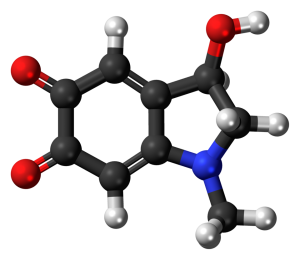
Fig. 5 – Adrenochrome. A real compound. Available from chemical suppliers. Formed by leaving adrenaline solution in open air. Not reliably psychoactive. No anti-ageing properties. Does not require a human victim. The conspiracy theory built around it killed a schizophrenia hypothesis, misread a gonzo novel, recycled a medieval blood libel, and sent a man with a rifle into a pizza restaurant. Hoffer and Osmond were just looking for a treatment for their patients. / Public Domain
References
- Britannica — Adrenochrome: britannica.com/science/adrenochrome — comprehensive scientific and cultural history
- McGill OSS — “QAnon’s Adrenochrome Quackery”: mcgill.ca — authoritative debunking of conspiracy claims
- Wikipedia — Adrenochrome: en.wikipedia.org/wiki/Adrenochrome
- Wikipedia — Abram Hoffer: en.wikipedia.org/wiki/Abram_Hoffer
- HowStuffWorks — “Untangling the Conspiracy Theories Around Adrenochrome”: howstuffworks.com
- ResearchGate — “Hallucinogens as Hard Science: The Adrenochrome Hypothesis for the Biogenesis of Schizophrenia”: researchgate.net
- Irish Times — Obituary of Humphry Osmond (February 2004): history of the Osmond-Hoffer collaboration and the coining of “psychedelic”: irishtimes.com
- Orthomolecular.org — Hoffer’s first-person account of the adrenochrome hypothesis: orthomolecular.org
- PubChem — Adrenochrome compound data: pubchem.ncbi.nlm.nih.gov
- American Chemical Society — Molecule of the Week: Adrenochrome: acs.org
- Wired — “The Dark Virality of a Hollywood Blood-Harvesting Conspiracy”: wired.com
- Forbes — “The Adrenochrome Conspiracy Theory Pushed by Sound of Freedom Star, Explained” (July 2023): forbes.com
- Thompson, Hunter S. — Fear and Loathing in Las Vegas. Random House, 1971. (Primary fictional source of human-extraction claim)
- Huxley, Aldous — The Doors of Perception. Chatto & Windus, 1954. (First literary reference to adrenochrome in counterculture context)
- Hoffer, A. and Osmond, H. — “The Adrenochrome Model and Schizophrenia.” Journal of Nervous and Mental Disease (1959). (Primary scientific publication of the hypothesis)
Last updated: February 20, 2026. · File declassified: February 20, 2026.


